





Media Library

Documentary, graphic and/or audiovisual knowledge objects are offered here, offering information on various sectors and topics. Use the keyword search or search filters to access current audiovisual and documentary knowledge objects useful for your implementation.

If you have any questions or suggestions, please contact us here.

Introduction workshop to Regenerative Agriculture, session 2

Regenerative agriculture proposes producing food while caring for the soil, biodiversity, and the well-being of those who work the land.

Introduction workshop to Regenerative Agriculture, session 1

Regenerative agriculture proposes producing food while caring for the soil, biodiversity, and the well-being of those who work the land.

Grups operatius a Catalunya. Call 2018 (Catalan)

The Technical Dossier no. 123: “Grups operatius a Catalunya. Call 2018” is dedicated to the Groups Operatius developed within the framework of the CAP Strategic Plan (PEPAC 2023-2027), and includes the Agricultural Knowledge and Innovation Systems, also linked to AKIS (Agricultural Knowledge and Innovation System).

EIT Food Consumer Observatory

The EIT Food Consumer Observatory regularly produces research reports and studies on consumer perceptions of food.

Practical guide on soil management and soil health from the SOILBIO project

Practical guide on soil management and soil health from the SOILBIO project

Guide to good practices in soil management with respect to biodiversity

Guide to provide farmers with knowledge about the interactions that occur in the soil in relation to its biodiversity and how these influence fertility and resilience depending on the agricultural practices used by the farmer.

Influence of Irrigation and Other Factors on Sunflower Crop Yield

Traditionally, rainfed agriculture has been developed not only due to the low availability of irrigation water but also because farmers assume that applying water to crops such as wheat or sunflower is not economically viable, as that water could be used for other crops that potentially generate higher profits.

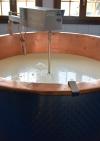
Recommendations for Making Brine-Ripened Cheese

Traditionally, brined cheeses have been produced in Mediterranean countries and some near the Balkans. They are characterized by a final ripening and preservation stage immersed in brine, which gives them their firmness and characteristic saline and acidic notes.

Agronomic Evaluation of Kabuli Chickpea Ecotypes. 2023/2024 Crop Season.

A set of Kabuli chickpea ecotypes was evaluated in two different locations for the variables flowering date, plant height, first pod emergence date, dry grain yield, dry grain relative humidity, test weight, and 100-seed weight. The experimental design was a randomized block with three replicates. The results of the statistical analyses performed are presented in the document.

Evaluation of Desi Chickpea Germplasm for Use in Animal Feed

A set of chickpea entries of the Desi type from the IFAPA Legume Germplasm Bank were evaluated in two different locations for the variables flowering date, plant height, date of first pod emergence, dry grain yield, dry grain relative humidity, test weight, 100-seed weight, and protein content. The experimental design was a randomized block with three replicates.

Study of Mycotoxins in Winter Cereals in Andalusia

A wide range of filamentous fungi are capable of producing different types of mycotoxins in cereals, which pose a serious risk of chronic toxicity to humans and animals. These toxins can be generated throughout the entire production cycle, with the highest levels found in raw materials (cereal grains).

Aflatoxins in corn grain. Flowchart and HACCP system in the field, receiving, and storage.

A wide range of fungi are capable of producing different types of mycotoxins. In the case of aflatoxins, the most well-known producing fungi are of the Aspergillus genus. Corn is among the most affected crops.

Recommendations for Composting Horticultural Remains.

One of the possibilities for managing and recovering plant waste is composting, minimizing transportation and processing costs to obtain a product that improves the soil's physical and chemical properties. Compost has great fertilizing value and improves the soil's water retention capacity. It also reduces leaching and the environmental impact on aquifers.

Behavior of the Main Pistachio Varieties

One of the key aspects for successful cultivation is the correct variety selection. This publication presents the initial results of a study on the performance of the main pistachio varieties, conducted by the Mediterranean Fruit Growing team at IFAPA.

Guide to groundcovers in citrus trees

One of the fundamental objectives of sustainable production systems must be the control of water erosion of the soil, which requires appropriate soil management and conservation techniques.

Characterization of Functional Compounds in Different Strawberry Varieties

Several studies have shown that these varieties differ in the quantity and type of antioxidants. Given this multivarietal nature, it is interesting to know the antioxidant levels of the varieties grown each season. In fact, these antioxidants can vary depending on the phenological stage of the crop and the weather conditions during the season, which runs from autumn to late spring.

Red Fruit Irrigation Programming Manual

A detailed review of irrigation scheduling for soft fruit crops in the province of Huelva, using weather forecasts, is presented. The scheduling is based on the FAO methodology for calculating crop water requirements. The procedure for calculating greenhouse ETo is described, and specific Kc values for soft fruit crops in the province of Huelva are proposed.

Ten years of applying alperujo compost in olive groves

The results of a ten-year study are presented, during which different mixtures of olive oil compost were applied to olive groves. The influence on the improvement of soil fertility and fruit oil yield was evaluated.

Biohealthy Compounds of Pistachio

The results of a study of 11 pistachio varieties grown in Andalusia during the 2019 and 2020 seasons are presented, assessing their total phenolic compound content, antioxidant activity, carotenoid content, and chlorophyll content. The color of the shell, the integument, and the interior of the fruit are also studied.

Progress of Productive and Quality Results of Strawberry Fruit in Conventional Cultivation obtained until December 31, 2015

Production data for the ten varieties under study are shown, obtained in the three conventional cultivation locations where the trials are carried out, up to February 28 and March 31 of this year 2015. In addition, data on organoleptic quality, firmness and soluble solids content, up to March 31, are expressed as the average of the three samplings carried out up to that point.

Download in Excel format, limit 1000 results
Register to increase your download capacity