





Media Library

Documentary, graphic and/or audiovisual knowledge objects are offered here, offering information on various sectors and topics. Use the keyword search or search filters to access current audiovisual and documentary knowledge objects useful for your implementation.

If you have any questions or suggestions, please contact us here.

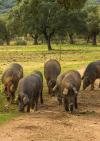
Management of Iberian pigs in pastures

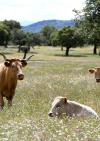
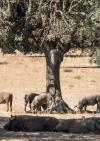
The Dehesa or pastureland system is a livestock agroecosystem comprised of two basic components: the tree (usually Quercus sp.) and the vegetation cover (grass and scrubland). Extensive livestock farming (cattle, sheep, and Iberian pigs) takes advantage of their products.

Impact of Different Dehesa Conservation Actions on the Sector and Society of Andalusia

Results of the evaluation carried out on the impact of the actions carried out by the LIFE+ Biodehesa Project in Andalusia.

Practical guide for sowing holm oak acorns

The conservation and renewal of holm oaks and cork oaks is essential for the survival of the Mediterranean sclerophyllous forest, which is the most abundant forest formation in Andalusia.

Dossier of supra-autonomous innovation projects

Inventory of innovative projects implemented by supra-regional operational groups of the European Innovation Partnership for agricultural productivity and sustainability of the National Rural Development Programme (PNDR) 2014-2022, submeasure 16.2.

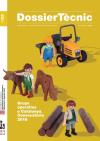
Operational Groups in Catalonia. Call for 2018

"Technical Dossier No. 123: “Operational groups in Catalonia. Call 2018” is dedicated to the Operational Groups developed within the framework of the CAP Strategic Plan (PEPAC 2023-2027), and taking into account the Agricultural Knowledge and Innovation Systems, also known as AKIS (Agricultural Knowledge and Innovation System).

Modeling water flows and vegetation cover in dehesa with remote sensing

This publication describes the progress made by IFAPA in remote sensing modeling of water flows and vegetation cover in dehesa forests.

How much is Andalusian society willing to pay for agricultural landscapes and why? The case of the dehesa and olive groves on slopes

In agricultural landscapes, their aesthetic, ecological, and cultural dimensions are clearly integrated, creating a link between the cultural ecosystem services they provide to society and other ecosystem services, including biodiversity preservation.

Advances in Root Rot Control in the Dehesa: Biofumigation

Root rot caused by Phytophthora cinnamomi in Quercus trees is responsible for the death of holm oaks and cork oaks in dehesas. Biofumigation using green burying of some Brassicas may be another tool for integrated disease control.

Calcium Fertilizations in the Control of Root Rot in Trees in the Dehesa

Root rot affecting Quercus, caused by soil-borne pathogens such as Phytophthora cinnamomi or Pythium spiculum, is responsible for many deaths of holm oaks and cork oaks in dehesas. Calcium fertilization is a tool for integrated disease control.

Root rot: Description and control applied to dehesa ecosystems

Root rot caused by the pathogen Phytophthora cinnamomi Rands. has been identified as one of the most damaging and lethal diseases affecting Quercus trees worldwide.

The Production of Holm Oak Acorns in the Dehesa

The acorn plays a fundamental role in the dehesa (pasture) because it is obtained in a season when there are few resources available in the countryside, and its high energy value makes it highly valued for fattening and maintaining livestock and game.

Soil management against erosion in Dehesa

This manual is intended as a reference tool for identifying erosion risks in pastureland farms and recommends actions to address them where possible. Specifically, the manual outlines good soil management practices and devotes a chapter to the control of gullies, the appearance of which is a symptom of severe erosion.

Sheep management in the dehesa

This manual covers the basics of sheep production in the dehesa, the minimum facilities required for proper management, feeding based on pasture availability in the dehesa, reproductive management, health, hygiene, and animal welfare aspects, and reviews the differentiating factors between conventional production and organic and integrated production.

Acorn Production in the Dehesa: Influencing Factors

This document reviews the main factors, both internal and external to the tree, that affect acorn production in the dehesa. This document summarizes the talk given at the 9th Iberian Pork Conference, organized by ASAJA Córdoba on April 6, 2016, in Villanueva de Córdoba.

Pruning the tree in the pasture

The purpose of this publication is to present the most important technical aspects that define tree pruning in the dehesa, as well as the limitations and precautions that must be taken into account when carrying out its implementation. Unit 1 presents the general criteria and physiological basis that must be taken into account when approaching tree pruning in the dehesa.

Advances in the evaluation of grass and acorn production in the dehesa using near and remote sensors

This publication describes a series of advances made at IFAPA to integrate information from remote sensing into the management of extensive grazing in dehesa systems. To achieve this, data provided by these sensors, primarily onboard satellites and aircraft, are combined with precise field measurements and models.

Grups operatius a Catalunya. Call 2018 (Catalan)

The Technical Dossier no. 123: “Grups operatius a Catalunya. Call 2018” is dedicated to the Groups Operatius developed within the framework of the CAP Strategic Plan (PEPAC 2023-2027), and includes the Agricultural Knowledge and Innovation Systems, also linked to AKIS (Agricultural Knowledge and Innovation System).

The State of Organic Livestock Farming in Andalusia and its Projection

Summary of the statistics provided by the various authorized regulatory bodies in Andalusia between 2013 and 2014, to observe and analyze potential trends in organic livestock farming and their expectations for the new CAP framework 2015-2020.

Animal Welfare in Poultry Farms

Manual intended for use in courses on Animal Welfare in Poultry Farms. The courses will have a minimum duration of 20 hours and are intended for owners and those working on poultry farms.

Application of biocides for veterinary hygiene

Changes in regulations and the need to adapt and update content justify the new edition of the Book on the Application of Biocides for Veterinary Hygiene.