





Media Library
Documentary, graphic and/or audiovisual knowledge objects are offered here, offering information on various sectors and topics. Use the keyword search or search filters to access current audiovisual and documentary knowledge objects useful for your implementation.
If you have any questions or suggestions, please contact us here.
Destacados
Dynamic guide to national aid and incentives for companies in the livestock sector
The Directorate General for Industry and Small and Medium-Sized Enterprises of the Ministry of Industry, Energy and Tourism has developed a dynamic guide to national aid and incentives for companies in the livestock sector. This guide is constantly updated and contains information on aid and incentives with open application periods.
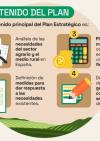
CAP strategic plan
With the reform of the CAP 2023-2027, a new approach is established whereby Member States must set out the details of the interventions or measures of the new CAP, through a strategic plan.
Practical Guidance on the Application of Traceability, Self-Control and Conditionality in the Integrated Production System of Castilla y León
The purpose of this PRACTICAL GUIDE is to recommend the minimum actions that must be implemented by entities that carry out the Integrated Production system, especially regarding the types of control to be carried out, their frequency and the sampling methodology.
Horticultural crops in Castile and León
This set of fact sheets on horticultural crops in Castile and León contains information on: Garlic. Cabbage. Onion. Endive. Asparagus. Strawberry. Green peas. Green beans. Lettuce. Pepper. Leek. Tomato. Carrot.
Eco-regimes on pastures
Ecoregimes in pastures.
Improving the Management of Agricultural Farms
One of the challenges facing the sector is to improve the management of the efficiency of agricultural holdings. Innovation is of crucial importance to achieve this. The agricultural sector is immersed in an accelerated process of updating and adapting to a digital model that is marked by the incorporation of information and communication technologies.
Traceability in the Agri-Food, Livestock, Agricultural and Forestry Sector
Technology and digitalisation through different tools such as blockchain, ICT tools or Big Data, constitute efficient solutions to optimise traceability, food safety, and avoid fraud and unfair competition throughout the supply chain.
Marketing in the agricultural, livestock, forestry and agro-food industries
Digitalisation represents an opportunity advantage for the agricultural, livestock, forestry and agri-food sectors, in terms of the promotion and sale of their products.
Climate Change and Carbon Footprint Reduction
Current challenges focus on promoting new, more environmentally sustainable strategies. Technicians and researchers agree on the need to increase carbon sequestration in three complementary areas: forestry systems, crops and agroforestry systems. New, more sustainable land use management tools are being developed through the Operational Groups and Innovative Projects.
The Spanish beekeeping sector in 2022. Main economic figures and indicators
Document with economic indicators of the beekeeping sector in Spain.
National Contingency Plan against Trichina
Trichinosis is a parasitic disease that affects humans and numerous host species, mainly wild and domestic mammals, caused by various species of the genus Trichinella.
National Contingency Plan for Eotetranychus lewisi
This document sets out the measures to be taken against Eotetranychus lewisi, a regulated harmful organism, with the aim of preventing its emergence and, if it does, acting quickly and effectively, determining its distribution and implementing eradication measures. Eotetranychus lewisi is a mite of the Tetranychidae family.
Contingency Plan for Golden Flavescence of the grapevine
This document sets out the measures to be taken against Flavescence dorée of grapevine (FD), a Union quarantine pest regulated by Regulation (EU) 2016/2031 and Regulation (EU) 2019/2072, with the aim of preventing its appearance, and, if it does appear, acting quickly and effectively, determining its distribution and combating it in order to prevent its spread and eradicate it.
National Contingency Plan for Elsinoë fawcettii
This document outlines the measures to be taken against Elsinoë fawcettii, a regulated harmful organism, with the aim of preventing its emergence and, if it does, responding quickly and effectively, determining its distribution, and implementing eradication measures. Elsinoë fawcettii is a fungus of the Ascomycota phylum and the Elsinoaceae family that causes the disease citrus scab.
Tomato brown rugose fruit virus contingency plan
This document sets out the measures to be taken against the Tomato Brown Rugose Fruit Virus (ToBRFV) virus, with the aim of preventing its appearance and, if it does appear, acting quickly and effectively, determining its distribution and combating it in order to try to eradicate it and prevent its spread at all times.
Aleurocanthus spiniferus Contingency Plan (Quaintance)
This document sets out the measures to be taken against the quarantine pest Aleurocanthus spiniferus (Quaintance), with the aim of preventing its appearance and, if it does appear, acting quickly and effectively, determining its distribution and combating it in order to try to eradicate it and prevent its spread at all times.
National Contingency Plan for Scirtothrips aurantii
This document outlines the measures to be taken against the Scirtothrips aurantii Faure insect, a quarantine pest, with the aim of preventing its appearance, and if it does appear, acting quickly and effectively, determining its distribution and combating it in order to try to eradicate it and at all times prevent its spread.
Meat and meat products: tripe
Nutritional assessment: The majority of tripe is water, followed by protein. Its fat content, especially saturated fat, is less than 3%. This last figure should be interpreted with caution. When assessing the nutritional value of a recipe based on tripe, the lipid content of the other ingredients must be taken into account.
Phytosanitary bulletin of notices and information
Pollinating insects are vitally important for the proper functioning of crops. Pollination is essential to ensuring the quantity and quality of crops and food production, directly linking wild ecosystems with agricultural production systems.
Triptych Rhynchophorus ferrugineus (Red palm weevil)
Recommendations for treatments against red palm weevil and other palm borer pests