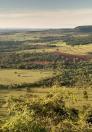






VINEURO Operational Group: Demonstrating the benefits of good ecosystem practices in vineyards, improving the aromatic and neurosensory expression in wines
- Type Operational group
- Status In progress
- Execution 2026 -2028
- Assigned Budget 599.840,00 €
- Scope Supraautonómico
- Autonomous community Castilla y León; Cataluña; Navarra, Comunidad Foral de
- Main source of financing CAP 2023-2027
R2-Practical Guide and Agronomic Indicators for BPE-PAM A practical guide is expected to be developed that includes agronomic indicators to evaluate the establishment and management of aromatic and medicinal plants in vineyards. This information will allow winegrowers and technicians to monitor the effects on the soil, the crop, and biodiversity, facilitating evidence-based decision-making. The main benefit will be having practical tools that allow for optimizing vineyard management, improving sustainability, and applying these practices with greater safety and efficiency.
R3-Influence on the aromatic profile of the must. This study aims to evaluate how the planting of aromatic and medicinal plants influences the aromatic profile of the must, allowing for the identification of changes in volatile compounds associated with quality. The results will help to understand the relationship between vineyard biodiversity and sensory characteristics, providing information to improve the expression of terroir. For wineries and winegrowers, the benefit will be having evidence to support practices that help differentiate their wines in the market.
R4-Winemaking Techniques and Wine Quality: This project aims to analyze how ecosystemic vineyard practices influence winemaking processes and the final quality of the wine, evaluating physicochemical and sensory parameters. The results will allow for the adaptation of winery practices to enhance the positive effects observed in the field. The main benefit will be improved product quality and consistency, reinforcing its added value and competitiveness.
R5-Neurotasting and Sensory Correlation: Neurotasting techniques are expected to be applied to analyze consumer response to wines from vineyards with ecosystem-based practices, identifying patterns of perception and preference. The results will allow for relating sensory attributes to consumer experience and guiding differentiation strategies. The benefit will be to improve the connection between product and market.
R6-Economic Value and Competitiveness: This study aims to evaluate the economic impact of planting aromatic and medicinal plants in vineyards, considering costs, benefits, and opportunities for differentiation. The results will allow winegrowers and wineries to assess the viability of these practices and their contribution to profitability. The main benefit will be access to information to support strategic decisions and improve competitiveness.
R7-Big Data Platform: A platform is expected to be developed that integrates agronomic, environmental, and sensory data to facilitate analysis and decision-making. This tool will allow technicians and winegrowers to access useful information to optimize vineyard management and evaluate results. The benefit will be improved efficiency and a better understanding of the system.
R8-Communication and Dissemination: The results are expected to be shared through workshops, technical materials, and outreach activities that facilitate the adoption of ecosystem-based practices in vineyards. Winegrowers will be able to learn about real-world experiences and apply recommendations adapted to their specific conditions. The main benefit will be to accelerate adoption and improve the sustainability of the sector.
RD1-Effective and Efficient Communication Strategy. A robust communication strategy is expected to be in place to ensure that VINEURO's objectives, progress, and results are clearly and continuously communicated to winegrowers, wineries, technicians, government agencies, and other stakeholders. The outcome will include a recognizable corporate identity (logo and materials), a communication plan with internal responsibilities and guidelines, and the use of member databases to maximize reach without compromising data protection. The value for the end user will be to receive useful and regular information on ecosystem-based practices with PAM (Planned Animal Mechanisms) in vineyards and their impact on wine quality, facilitating project monitoring and subsequent adoption. Professionals will be able to leverage this outcome to access practical content, participate in GO (Government Operations) activities, and stay connected to official project resources.
RD2-In-person Dissemination Activities In-person activities are planned to bring VINEURO closer to the sector through demonstration days at pilot wineries, a presentation day, a final event, and participation in conferences, technical forums, and trade fairs. This will allow winegrowers and wineries to see the BPE-PAM models firsthand, learn about vineyard management, review agronomic results, and assess their impact on wine quality. The main benefit will be practical learning and reduced uncertainty, as the innovation can be compared with real-world experiences and discussed with experts and partners of the Operational Group. Technicians will be able to use these activities to update recommendations, build networks, and share solutions applicable to different wine-growing contexts, further enhancing the project's visibility and creating synergies with other operational groups.
RD3-Digital Dissemination Activities: A comprehensive digital ecosystem is expected to be created to disseminate the project and its results, including a dedicated website, social media profiles, a YouTube channel, and a presence in EU-FarmBook. This will facilitate easy access to updated content (progress reports, materials, videos, presentations) and allow for a continuous flow of information through newsletters and mailings to attendees after in-person activities. For winegrowers, wineries, and technicians, the added value will be having resources available anytime, anywhere, with practical information on implementing PAM (Planned Animal Management), vineyard results, and sensory quality. Furthermore, networking with other GOs (Governments of Origin) will be fostered to amplify the impact and share knowledge, accelerating the adoption of ecosystem-based practices and their application in the sector.
RD4-Dissemination through publications. Publications and communication materials are expected to be available to facilitate the understanding and application of the project results, including informational brochures and leaflets, and regular press releases aimed at both specialized and general media outlets, as well as potential radio appearances. The practical objective is to translate the project's progress into clear and useful messages for winegrowers, wineries, technicians, and other stakeholders, highlighting opportunities for real-world implementation. The added value will be to strengthen the visibility of the Working Group, increase its reach beyond in-person events, and help the sector understand the benefits of Good Practices for Vineyards and their influence on wine quality. Professionals will be able to use these materials as a quick reference to explain the practices, justify decisions, and support adoption processes.
RD5-Monitoring of Dissemination Activities. Systematic monitoring of dissemination activities is expected to be carried out through the creation of press clippings and follow-up reports associated with each communication outcome, publishing them on the project website and in EU-FarmBook. This will allow for verification of the actual reach of the actions, identification of which formats and channels generate the most interest, and improvement of knowledge transfer effectiveness during implementation. For the end user, the added value will be having an accessible and transparent record of activities, materials, and public appearances, facilitating access to official project information. For technicians, partners, and the administration, this monitoring will provide verifiable evidence of communication impact and allow for adjustments to the dissemination strategy to maximize reach to winegrowers, wineries, and other stakeholders in the sector.
The project aims to demonstrate that integrating aromatic and medicinal plants into vineyards improves functional biodiversity, promotes soil health, and contributes to resilience against climate change, reducing the need for inputs. The results will allow for the evaluation of their effect on grape quality and the aromatic and sensory expression of the wine, as well as their impact on the sustainability of the production system. The project will generate practical recommendations on the establishment and management of these cover crops, evidence of environmental and productive benefits, and tools to support decision-making in vineyards. Furthermore, it is expected to strengthen product differentiation and add value to wine farms through practices aligned with market demands and sustainability policies.
The project will conduct vineyard trials by planting aromatic and medicinal plants as an ecosystem-based practice, evaluating their effect on functional biodiversity, soil, and crop performance. Agronomic and environmental monitoring will be carried out, including tracking soil, physiological, and production parameters, as well as analyzing grape and wine quality. The influence of these practices on aromatic and sensory expression will be studied through volatile compound analysis and tasting evaluations, incorporating neuroscience techniques applied to the consumer. The results will be integrated through data analysis to establish relationships between management practices, biodiversity, and product quality. Finally, technical recommendations will be developed, and knowledge transfer and outreach activities will be carried out for winegrowers, wineries, and other stakeholders in the sector to facilitate the adoption of sustainable practices and improve vineyard competitiveness.
The project addresses the need to improve vineyard sustainability and resilience by integrating aromatic and medicinal plants as ecosystem practices that promote biodiversity, reduce inputs, and improve the aromatic expression and value of wine, generating practical recommendations for winegrowers and wineries.
- Coordinator/Entity Name: Agricultural and Agri-food Technology Centre. ITAGRA CT
- Postal address: AVDA DE MADRID, 44, CAMPUS LA YUTERA EDIF. A. PALENCIA
- Email coordinator/entity: RDONCEL@ITAGRA.COM
- Telephone: 979108303
- Centro tecnológico agrario y agroalimentario. ITAGRA CT
- BODEGAS MOHA S.L.
- VINYES DOMÈNECH, SL
- SOCIOGRAPH NEUROMARKETING S.L.
Related projects