






Training courses
Destacados
29/05/2026
Veraliment
Artificial intelligence (AI) course for food quality managers
Aimed at quality managers in the food sector who want to apply artificial intelligence (AI) in their daily work, the objective of the course is to learn how to practically apply AI through multiple practical cases designed specifically for the food quality department: procedures, audits, data analysis, reports and much more. PROGRAM Introduction to
13/04/2026
Instituto Agronómico Mediterráneo de Zaragoza
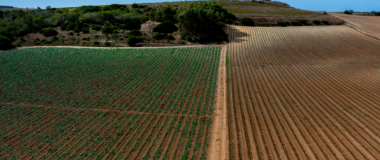
Regenerative agriculture and sustainable soil management for greater climate resilience and food security in the Mediterranean
This course is designed for agricultural professionals, researchers, policymakers, and producers. Its objective is to provide advanced knowledge and practical tools for the design and implementation of regenerative agriculture and sustainable soil management practices adapted to Mediterranean agroecosystems. Faced with the urgent challenges of

29/04/2024
CNTA
Food shelf life
CNTA course for the acquisition of the necessary knowledge about the methodologies to be applied in the study of the shelf life of foods from the point of view of sensory and microbiological quality. Registration January 16, 2024 to April 29, 2024 PROGRAM
25/04/2024
CNTA
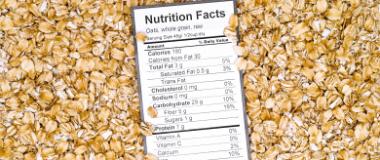
Food labeling in Europe: nutritional and health declaration
CNTA course to learn about the legislation applicable to nutritional and health claims in Europe and learn to identify and justify the claims that you can use on your company's products. Registration from November 21, 2023 to April 24, 2024 PROGRAM
18/04/2024
Clúster Alimentario de Galicia (CLUSAGA)
Management and Control of Food Quality
This 60-hour in-person course pursues specialization in food safety in order to be able to perform functions of development, implementation and improvement of food safety and inspection mechanisms. PROGRAM | REGISTRATION | INFORMATION and CONTACT, Inés Rodríguezm unitec@clusaga.org, 981556062

16/04/2024
CNTA
Food legislation: FSSC 22000 v6
This CNTA course arises to help companies that are taking their first steps in implementing this food safety standard and want to have an overview of its content. Registration from November 20, 2023 to April 15, 2024 PROGRAM

15/04/2024
FECOAM
Fruit and vegetable manipulator
10-hour in-person course that teaches current legislation on the safety and health of food intended for the final consumer and the correct and effective application of correct hygiene practices. PROGRAM | INFORMATION and REGISTRATION, 968351282 / 699786927, lidia.perez@fecoam.es | PLACE: Alguazazs Town Hall

10/04/2024
Simbiosis, S. Coop. Galega
Labeling of foods of animal origin
50-hour online course in which the specific aspects of labeling of all products of animal origin will be covered: labeling of meat and meat products, milk and dairy products, eggs and egg products, and fishery products, and the legislation of labeling of foods of animal origin. PROGRAM | INFORMATION and CONTACT, formacion@cooperativasimbiosis.com /
04/04/2024
Simbiosis, S. Coop. Galega
Traceability in companies in the food sector
40-hour online course on traceability of special interest to those who work in the food sector (Veterinarians, Agricultural Engineers, Biologists and related professions) and wish to implement a traceability system in a company. This course is accredited by the National Health System with 4.8 credits of continuing education for Graduates/Degrees in

19/02/2024
EILZA
Yogurt and fermented milk technology
The course covers the knowledge of the physical-chemical and microbiological characteristics of yogurts and fermented milks and analyzes the production procedures. PROGRAM | REGISTRATION | CONTACT: formacion@eilza.es and 654826419

18/02/2024
IRFAP
Good hygiene practices in primary agricultural production
The course allows know the obligations of producers derived from hygiene in primary agricultural production. CONTENTS (10 h) 1. General aspects 2. Water for agricultural use 3. Use of phytosanitary products 4. Use of fertilizers and organic amendments 5. Use of inorganic fertilizers 6. Hygienic-sanitary conditions of workers and agricultural
15/02/2024
Consejo General de Colegios Oficiales de Ingenieros Técnicos Agrícolas de España
Food safety certification: IFS BRC
Certification of food processing companies with food safety standards It is being consolidated as a guarantee of the quality and safety of its product and as a method that allows the company to differentiate itself from its competitors. The online course is structured in 4 modules with one evaluation per module . The student will be able to view

15/02/2024
Consejo General de Colegios Oficiales de Ingenieros Técnicos Agrícolas de España
Food safety certification: GLOBAL GAP
This online course Its objective is to study the application requirements of GLOBAL GAP to implement the standards in primary products of the agri-food sector . This standard is focused on ensuring the implementation of a quality management system from the point of view of reconciling food safety and quality control. The online course is structured
14/02/2024
Ruralcat
Develop your agri-food transformation project
Develop your agri-food transformation project/Develop your agri-food transformation project Goals: Technically train participants to develop a food processing activity with efficiency, safety and compliance with regulatory requirements. Promote projects, through training as well as strengthening the network of producers. Promote relationships

06/11/2023
Formación Agrónomos
ATEX Course in the Agri-Food Industry
COURSE PRESENTATION Explosions are a risk in the agri-food industry, although they occur infrequently, when they do occur they have catastrophic consequences. Identification and classification in these risk areas is necessary. Facilities where flammable or combustible substances are handled are susceptible to the risk of forming ATEX explosive