





Training courses
Destacados

IFAPA
Technical conference on transfer and trials - Adaptive management of chestnut and holm oak
Contents (4 hours): Presentation and development of the results obtained in the different tests

IFAPA
Crop diversification technical day
Contents (8 hours): Cultural techniques Pests, diseases and physiopathies Commercialization

Formación Agrónomos
ATEX Course in the Agri-Food Industry
COURSE PRESENTATION Explosions are a risk in the agri-food industry, although they occur infrequently, when they do occur they have catastrophic consequences. Identification and classification in these risk areas is necessary. Facilities where flammable or combustible substances are handled are susceptible to the risk of forming ATEX explosive
Formación Agrónomos
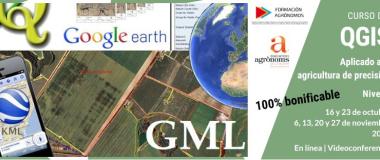
IV Edition. QGIS Online Course applied to precision agriculture. Level 1.
COURSE PRESENTATION The course program that we now propose is based on the presentation of free software known as QGIS. The QGIS program has a series of basic functionalities similar to other GIS programs but it has very interesting extra functionalities that differentiate it from them and that, either, can complement the GIS with which you

Formación Agrónomos
Agricultural valuation. Concepts and their practical application
COURSE PRESENTATION Knowing the real value of things continually requires valuation. This value may vary depending on its purpose. Sometimes, knowing this value helps us decide whether or not to make certain investments (purchase, sale, lease, etc...). Through this course, the different existing purposes will be studied, as well as the application
Formación Agrónomos
Calculation of the carbon footprint and the water footprint
COURSE PRESENTATION The agri-food system is one of the main sectors responsible for environmental degradation. Today, it is the largest user of freshwater globally: agriculture accounts for 70% of the world's extracted freshwater. The food system is also responsible for between 21% and 37% of total greenhouse gas emissions. The water footprint and

Agroecología.net
Online course: Management of vegetal covers in organic production
REGISTRATION FORM There is a growing interest among farmers to increase knowledge about the management of plant covers to achieve maximum effectiveness. On the one hand, adventitious weeds are generally presented as the main reluctance to convert to organic, since they require a lot of labor to control. On the other hand, there is a lack of

FECOAM
Training, equality and rejuvenation of governing councils
2023 action program aimed at carrying out training, equality and rejuvenation activities of governing councils of agri-food cooperatives in business matters to improve their professionalization and the exercise of their functions By virtue of the Agreement between Agri-Food Cooperatives of Spain and the Ministry of Agriculture, Fisheries and Food

Agroecología.net
New regulations on organic production
On January 1, 2022, RE 2018/848, on organic production and labeling of organic products, came into force to continue guaranteeing products with high added value, healthy, nutritious and safe for health and the environment. These seminars will address the main changes in plant and livestock production, transformation and also labeling, being of

Cooperatives Agroalimentaries CV
Occupational risks in the Agricultural Sector
GOALS Analyze the stability of the agricultural tractor against overturning. Know the indicators that allow evaluating said stability. Respect the physical foundations of the factors causing the instability that can cause a rollover accident. Know how to apply preventive measures and safety rules while driving. Understand the main causes that can

COIAL
Water Footprint Course in the Agri-Food Sector
Water Footprint in the Agri-Food Sector. What is it, how to calculate it and why is it calculated? Goals: Obtain a good knowledge of the methodologies, sources of information and applicable tools for calculating the water footprint Learn to calculate the water footprint of an agri-food product Teaching dates: December 1, 7, 12, 15 and 19 PREFERENCE

FECOAM
Course for maintainer of facilities at risk of Legionella
Initial training and renewal Duration and cost: F. Initial: 30 teaching hours. Amount: €440 (rewardable) Renewal: 10 teaching hours. Amount: €220 (rewardable) From FECOAM we will process the course subsidy (TRIPARTITE FOUNDATION) More information by calling 651389790 / www.fecoam.es

Cooperatives Agroalimentaries CV
Course for the renewal of the phytosanitary professional user card. Vilanova d'Alcolea
Directed to Employed or self-employed workers in the agri-food sector or who wish to join it. Place and date of celebration Sant Bartomeu Agricultural Cooperative C/ Mayor, 72 12183 – Vilanova D' Alcolea (Castellón) Duration 6h00′ Free registrations. limited places You can register for this course by going through the cooperative Program: http:/

Agro-alimentarias
Use of geographic information in agri-food cooperatives in ArcGis Hub environment
By virtue of the execution of non-regulated training actions and acquisition of skills in digitalization within the digitalization package promoted by the Ministry of Agriculture, Fisheries and Food, Agro-food Cooperatives of Spain - through their Federations and Territorial Unions, FUTs - launches a program of training and knowledge transfer