





Training courses
Destacados

INALOCAL, SL
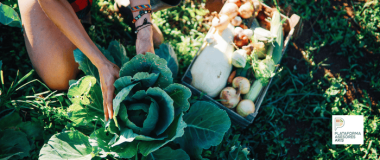
Joining the agricultural company
Online course on entering the agricultural business, lasting 200 hours, with morning and afternoon sessions. Recipients: These courses are aimed at young people without vocational training in agriculture who are planning to enter the sector as agricultural entrepreneurs, or who want to access certain structural aid or acquire the Priority Farm
IFAPA
Specialized training in organic agriculture for agri-food advisors
Online course of 80 hours. Application period is open until 04/15/2025 Observations It is essential to take into account the information regarding the criteria for evaluating applications in this training program, which can be found at the following link: https://ifapa.junta-andalucia.es/agriculturaypesca/ifapa/web/sites/defa… Contents Background

Cooperativas Agro-alimentarias
Training for advisors in the implementation of the Cooperative Field Notebook (C3)
Agro-Food Cooperatives of Spain is leading a digitalization strategy aimed at making it easier for cooperative technicians to comply with current regulations and integrate into public systems (such as SIEX) efficiently and securely. The implementation of the digital farm logbook will allow cooperatives to optimize the use of key resources, ensuring

Cooperativas Agro-alimentarias CLM
Incorporation into the agricultural company for young farmers - General Part (80 hours)
General objectives: Improve the qualifications of professionals in the agri-food sector and improve the competitiveness of companies in the sector. Promote generational change by placing emphasis on groups of young people and women linked to the agri-food sector. Specific objectives: To train participants to meet the training requirements necessary

Veraliment
Introduction to Artificial Intelligence for the Food Sector
Create specific procedures, extract what you need from a new regulation, or verify your product labels with Artificial Intelligence. Why get started in Artificial Intelligence with this course? We've designed a course specifically for the food industry with numerous practical cases that will help you solve your daily problems. Take this specialized
Universidad de Sevilla
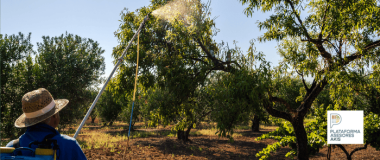
Precision Agriculture and 3D Crops: Application of Phytosanitary Products
Throughout the course, participants will learn about the most advanced technologies for precise 3D crop dosing based on maps and sensors, adapted to the specific needs of each area and crop type, within the global concept of Variable Dosing (VD). Emphasis will be placed on the importance of correct (precise) dosing of liquid and air flow in
DIH Datalife
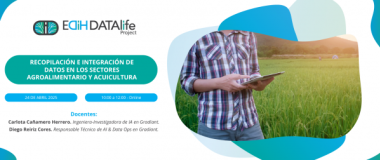
Data collection and integration in the agri-food and aquaculture sectors
The training addresses data capture from different perspectives and its integration with business data, adapting to the specificities of the sectors and providing the necessary skills to make the most of these technologies. The following topics will be covered: Current technological context of the primary sector Sector trends Example use cases
MAPA
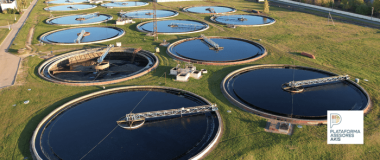
Reclaimed water. Application in irrigation
COORDINATOR: Santiago Artillo Sánchez bzn-formregadios@mapa.es OBJECTIVES: Knowledge of the application of Regulation EU 2020/741, on water reuse. Risk management, additional requirements and preventive measures to ensure that reclaimed water is used and managed safely. Integrated irrigation management with reclaimed water. Advantages and
Universidad de Sevilla
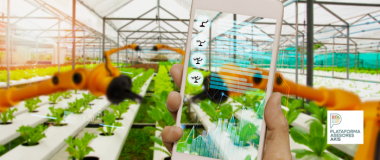
Artificial intelligence (AI) applied to agriculture: keys to understanding its operation and usefulness
Organized by the University of Seville, this two-hour course aims to understand how it works in general and how it can be applied to automate and accelerate tasks in agriculture, and to acquire basic knowledge of how to train one to be able to solve an agricultural problem. PROGRAM | REGISTRATION Application period open until 04/15
Universidad de Córdoba
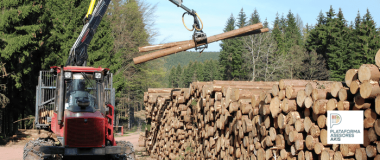
New technologies in machinery for the production of woody crops
Organized by the University of Córdoba, the course will allow participants to learn about the latest technologies in the control and automation of agricultural machinery for woody crops, as well as systems for managing inputs (fertilizer and phytosanitary products) tailored to the needs of each area of land, in what is globally known as "Variable
CNTA
Do you want to know the shelf life of food?
Virtual course, includes individual tasting (pending information)
ARATRIA
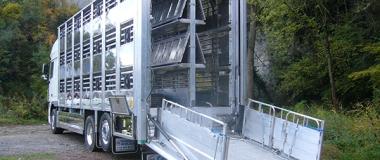
ANIMAL WELFARE IN TRANSPORT. ONLINE
Addressed to: Drivers and those responsible for the transport of live animals. Goals: Obtaining the Official Certificate of Competence for the transport of live animals throughout the European Union (Council Regulation 1/2005 of 22 December 2004 on the protection of animals during transport and related operations). Content: TOPIC 1. European Union
Formación Agrónomos
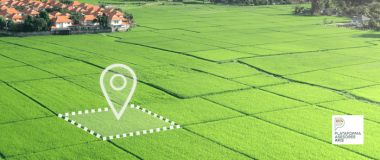
7th edition. QGIS online course applied to Precision Agriculture. Level 1
The course program that we now propose is based on the presentation of a free and open source software known as QGIS. The QGIS program has a series of basic functionalities similar to other GIS programs, but it has very interesting extra functionalities that differentiate it from these and that can either complement the GIS you are currently
Permanent
Permanent
MAPA
Farming and livestock farms: Production, innovation, advice and marketing (MOOC)
The aim of this course is to provide an overview of the functioning of advisory systems within the framework of the latest CAP reform. The course will provide in-depth knowledge of the essential elements of this policy, as well as other useful subjects for modernising and improving the competitiveness of farms. COORDINATOR: Cecilia Bretal Koenig
ARATRIA
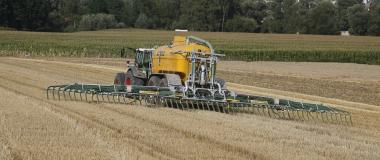
MTD COURSE TO REDUCE THE ENVIRONMENTAL IMPACT ON PIG FARMS
Addressed to: Course validated as complementary training to access aid intended to encourage the incorporation of young people into the agricultural sector, specifically to set up an intensive pig farm. HOM2025-00-0031 Best available techniques to reduce the environmental impact on pig farms. Goals: To train pig farm staff in the implementation of

Plataforma Tierra
Spanish AGROTECH Ecosystem. Business Challenges and Opportunities
This webinar will showcase the information collected in the report "Mapping the Agrotech Ecosystem in Spain, 2024 ," prepared by ICEX-Invest in Spain in collaboration with Grupo Cooperativo Cajamar. The session will explore the ecosystem of technologies and innovations in the Spanish agricultural sector, highlighting its strengths and encouraging
Permanent
Permanent
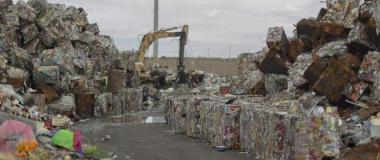
Online course: Waste management
Description The course is aimed at anyone interested in acquiring knowledge about waste management. Goals Understand its relevance to the environment and public health. Familiarize yourself with relevant laws and regulations. Identify and classify different types of waste. Learn efficient and safe techniques and methods. Implement strategies to

Asociación Española de Técnicos Cerealistas (AETC)
Glutopeak, rapid assessment of gluten quality. IV webinar of the AETC series “The laboratory as a source of data for decision-making”.
Within the training cycle “The laboratory as a source of data for decision making” of the Spanish Association of Cereal Technicians (AETC), the following webinar will take place on February 12: “Glutopeak, rapid evaluation of gluten quality” 16:00 h Welcome. Javier Alonso. President of the AETC 4:10 p.m. Zaira Ruiz. Technical Sales Representative

Fundación para la Agricultura del Conocimiento
Service crops in conservation agriculture, for advisors
Service crops have become a fundamental tool in conservation agriculture , providing essential benefits for the soil and agricultural ecosystems. Although they are not intended for commercialization, their incorporation into farms improves soil structure and fertility, prevents erosion, increases biodiversity, and optimizes water management. This

Formación Agrónomos
Service crops in conservation agriculture
COURSE PRESENTATION Service crops in conservation agriculture are incorporated with the aim of improving soil health, biodiversity and the yield of main crops without necessarily being harvested for commercialization, and can be an opportunity to include them in the products obtained on the farm. Service crops perform multiple functions beyond the