





Training courses
Destacados
AGROSLAB
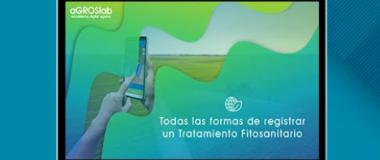
All the ways to register a phytosanitary treatment in aGROSlab
In accordance with the provisions of Royal Decree 34/2025, of January 21 , in its first article, which modifies Royal Decree 1311/2012 , as of January 1, 2026, the registration of Phytosanitary Treatments in the Digital Operating Notebook will be mandatory. If anything characterizes aGROSlab, it's the ease it offers users, incorporating multiple
Universidad de Sevilla
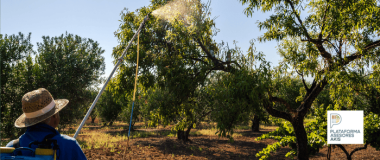
Precision Agriculture and 3D Crops: Application of Phytosanitary Products
Throughout the course, participants will learn about the most advanced technologies for precise 3D crop dosing based on maps and sensors, adapted to the specific needs of each area and crop type, within the global concept of Variable Dosing (VD). Emphasis will be placed on the importance of correct (precise) dosing of liquid and air flow in
ARATRIA
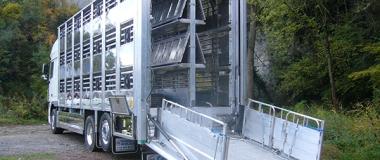
ANIMAL WELFARE IN TRANSPORT. ONLINE
Addressed to: Drivers and those responsible for the transport of live animals. Goals: Obtaining the Official Certificate of Competence for the transport of live animals throughout the European Union (Council Regulation 1/2005 of 22 December 2004 on the protection of animals during transport and related operations). Content: TOPIC 1. European Union

ARATRIA
HANDLER OF BIOCIDAL PRODUCTS FOR USE BY NON-SPECIALIZED PROFESSIONAL PERSONNEL.
Addressed to: All those people who use biocides classified as for professional use in their work environment. Royal Decree 830/2010, in Article 2.f., defines biocides for use by professional personnel as products authorized for this use in the official biocide registry, for use in the workplace. Personnel who apply these products have some

CIFEA Lorca
Professional user of phytosanitary products - Qualified level
Description This course is aimed at all those who wish to acquire the basic skills, which are necessary and mandatory, to handle and apply pesticides for phytosanitary uses. Goals: What are you going to learn? Distinguish between pests and diseases, and know and differentiate the different agents that cause damage to crops. Know the risks of

CIFEA Lorca
Professional user of phytosanitary products - Basic level
This course is aimed at all those who wish to acquire the basic skills, which are necessary and mandatory, to handle and apply pesticides for phytosanitary uses. Goals: What are you going to learn? Distinguish between pests and diseases, and know and differentiate the different agents that cause damage to crops. Know the risks of exposure to

CIFEA Torre Pacheco
Professional User of Phytosanitary Products. Basic Level
This course is aimed at all those who wish to acquire the basic skills, which are necessary and mandatory, to handle and apply pesticides for phytosanitary uses. Goals: What are you going to learn? Distinguish between pests and diseases, and know and differentiate the different agents that cause damage to crops. Know the risks of exposure to
Cajamar y Cohexpal
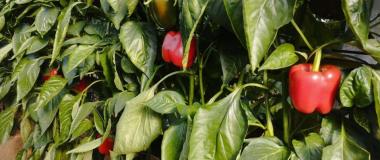
Incidence and biological control of Thrips parvispinus and red spider. 2024/25 campaign
Specialized face-to-face training that will address the incidence and biological control of Thrips parvispinus and red spider in the 2024/25 campaign The effects that the pests Thrips parvispinus and Tetranychus urticae are causing in pepper crops and the strategy for their control within Integrated Pest Management will be presented. In recent
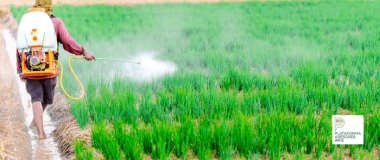
C.F.M.R MORALEJA
Course on agricultural pesticides - Basic level
Agricultural Pesticides Course - Basic Level, 25 hours in the afternoon. Observations: Courses co-financed by FEADER (85%), Ministry of Agriculture, Fisheries and Food (3.72%) and Regional Government of Extremadura (11.28%) based on the continuous training programme of the General Directorate of Rural Development contemplated in the RDP of

IFAPA
Applicator of phytosanitary products. Qualified level
Contents Crop pests: classification, description and damage they cause. Pest control methods. Importance of non-chemical methods. Means of phytosanitary protection. Strategies and techniques for integrated pest management. Biological control and other alternative techniques for pest control in different crops. General principles of integrated pest
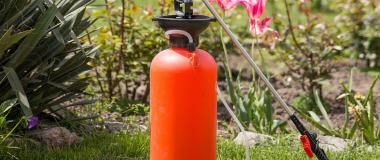
ASOC. FUNDACIÓN UNIVERSITARIA ISIDORIANA
Professional user of phytosanitary products. Basic level
This course is aimed at all those who wish to acquire the basic skills, which are necessary and mandatory, to handle and apply pesticides for phytosanitary uses. Goals: What are you going to learn? Distinguish between pests and diseases, and know and differentiate the different agents that cause damage to crops. Know the risks of exposure to

IFAPA
Applicator of phytosanitary products. Qualified level
Contents Crop pests: classification, description and damage they cause. Pest control methods. Importance of non-chemical methods. Means of phytosanitary protection. Strategies and techniques for integrated pest management. Biological control and other alternative techniques for pest control in different crops. General principles of integrated pest

Consejería de Agricultura, Ganadería, Mundo Rural y Medio Ambiente
Course for professional vegetable operators
The Department of Agriculture, Livestock, Rural World and Environment is organizing the third edition of the Course for professional plant operators, with the aim of informing attendees about the new European Union legislation in relation to pests regulated in material for multiplication, reproduction and seedlings of different plant species

CIFEA Lorca
Professional user of phytosanitary products - Basic level (Practices and evaluation)
This course is aimed at all those who wish to acquire the basic skills, which are necessary and mandatory, to handle and apply pesticides for phytosanitary uses. Goals: What are you going to learn? Distinguish between pests and diseases, and know and differentiate the different agents that cause damage to crops. Know the risks of exposure to
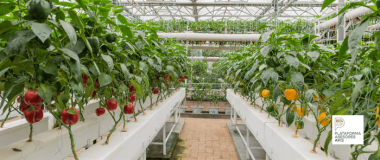
Plataforma Tierra
Bioproduct development: from idea to market
This webinar will explore the process of developing , evaluating and registering agricultural products . It will feature the participation of leaders and experts from renowned companies and associations in the agri-food sector. During the session, the essential stages of the process will be broken down, from initial formulation to obtaining

C.F.M.R. NAVALMORAL
Course on agricultural pesticides - Basic level
Agricultural Pesticides Course - Basic Level, 25 hours long, in the afternoon. Town: Navalmoral de la Mata (Cáceres) Start Date: 02/11/2025 End Date: 02/20/2025 File No.: E/2025PA-B/00014 No. of Places: 25 No. of Hours: 25 Session Type: Afternoon Organized by: CFMR NAVALMORAL Address: Ctra. Jarandilla, KM. 6,500 Town: Navalmoral de la Mata (Cáceres

Servicio de Formación del Medio Rural
Course on agricultural pesticides - Basic level
Agricultural Pesticides Course - Basic Level, 25 hours long, in the afternoon. Observations: Courses co-financed by FEADER (85%), Ministry of Agriculture, Fisheries and Food (3.72%) and Regional Government of Extremadura (11.28%) based on the continuous training programme of the General Directorate of Rural Development contemplated in the RDP of

DIDASCALIA FORMACIÓN Y CONSULTORÍA SL
Agricultural Pesticides Course - Qualified Level
Agricultural Pesticides Course - Qualified Level, 60 hours long, in the afternoon.

protección de cultivos, legislación
SUPPORT Webinar: Crop Protection Legislation
The European SUPPORT project, focused on Helping farmers meet the crop protection reduction targets of the Farm to Fork strategy through the implementation of integrated pest control, especially in strawberry, grape and olive crops, is now entering a phase in which policy recommendations can be made. For this reason, on 7 February 2025, from 10:00

Cooperativas Agro-alimentarias CLM
Renewal of the phytosanitary products handler card, Villaverde and Pasconsol (CU)
Details Validated by the Department of Agriculture according to the Order of 20/11/2013, which regulates the issuance of phytosanitary product handler cards for professional use. GENERAL OBJECTIVES: Improve the qualifications of professionals in the agri-food sector and rural areas. Promote the sustainable use of plant protection products by