





AGROALNEXT Project: Response of the grapevine and its associated microbial community to climate change conditions in semi-arid zones
- Type Project
- Scope Autonómico
- Autonomous community Murcia, Región de
- Main source of financing NextGenerationEU
- Project website Web del Proyecto
Description
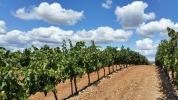
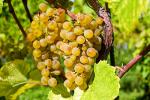
The project assesses the impact of climate change on the Monastrell grape variety and its soil microbiota in Jumilla, through experiments involving increased temperature and reduced rainfall. It analyzes the effects on physiology, productivity, and microbial biodiversity under semi-arid Mediterranean conditions.
Results
Heating and water restriction treatments cause severe stress, reductions in chlorophyll, flavonoids, and foliar nutrients, along with fewer and lighter grape clusters, increased raisining, and significant decreases in grape production. Organic vineyard management mitigates the effects of climate change, increases the abundance of mycorrhizal fungi, and improves soil fertility and multifunctionality compared to conventional management. This study aims to identify indicator species of arbuscular mycorrhizal fungi associated with climate change treatments as potential new biofertilizers for severe stress conditions.
Contact information
- Coordinator/entity name: María del Mar Alguacil García
- Mailing address: Not available
- Email coordinator/entity: mmalguacil@cebas.csic.es
- Phone: Not available
Coordinators
- CEBAS-CSIC
Related projects