





Media Library
Documentary, graphic and/or audiovisual knowledge objects are offered here, offering information on various sectors and topics. Use the keyword search or search filters to access current audiovisual and documentary knowledge objects useful for your implementation.
If you have any questions or suggestions, please contact us here.
Destacados
Genotypic and Health Characterization of Minority Grape Varieties Prospected in Andalusia
Due to its diversity and territorial extension, Andalusia is home to numerous minority varieties, offering local viticulture the opportunity to diversify its wine production. Between 2020 and 2022, molecular identification was carried out on 66 specimens from five traditional winemaking areas. Thirteen microsatellite markers were used, including the nine recommended by the OIV.
Pre-emergence herbicide trial against Centaurea diluta in durum wheat
Centaurea diluta Aiton, commonly known as broom, is a species of the Compositae family that is increasingly posing problems in herbaceous crops in the Andalusian countryside. Control with post-emergence herbicides is problematic precisely because of its staggered emergence and rapid growth.
Cotton Crop Residue Management for Pink Bollworm Control (Pectinophora gossypiella)
Cereals, oilseeds and protein crops
Recommendations for Calculating the Application Volume of Phytosanitary Treatments in Greenhouse Tomato Cultivation
To adapt the volume of phytosanitary mixture to crop development, a series of tools (tables and graphs) have been developed to estimate it for greenhouse tomatoes, based on easily measurable geometric parameters of the plant mass and the treatment equipment used. This document presents these tools and explains their use.
Rapeseed Variety Trials in Andalusia. 2021/22 Crop Season
In response to the need for viable alternatives for Andalusian farmers, IFAPA is continuing its network of rapeseed (Brassica napus) trials, aiming to provide farmers with answers on various aspects related to cultivation techniques, the performance of new varieties (Clearfield), the efficacy of new herbicides, disease resistance, and disease control treatments.
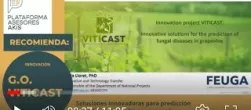
AKISPlataforma.es recommends GO VITICAST
Today we recommend the recently published video of the Webinar with the results of the VITICAST Operational Group, dedicated to finding innovative solutions for predicting fungal diseases in grapevines. In this video, you can see the initial presentation that describes the details of the project.
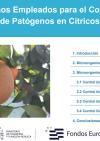
Microorganisms used for biological control in citrus fruits
The use of microorganisms for pest and disease control has gained interest in recent years. Numerous microorganisms are capable of competing with crop pathogens, reducing their growth and survival rates and, consequently, their impact on the plant.
Phytosanitary alert and information network, field protocol for crop monitoring: almond
Field manual for estimating the risk of damage caused by pests and diseases in almond cultivation.
Phytosanitary alert and information network, field protocol for crop monitoring: eggplant
Field manual for estimating the risk of damage caused by pests and diseases in eggplant cultivation.
Phytosanitary alert and information network, field protocol for crop monitoring: zucchini
Field manual for estimating the risk of damage caused by pests and diseases in zucchini cultivation.
Phytosanitary strategies in tomato
Strategies for the use of phytosanitary products in tomte cultivation
Legume pests (thematic poster)
The Castile and León Agricultural Pest Control Master Plan (AGREEMENT 53/2009, of May 14, of the Regional Government of Castile and León) constitutes a strategy of direct support for farmers in plant health, in line with a sustainable production and environmental model. Its ultimate objective is to provide farmers with useful information to support their decision-making processes.
Winter cereal diseases (thematic poster)
The Castile and León Agricultural Pest Control Master Plan (AGREEMENT 53/2009, of May 14, of the Regional Government of Castile and León) constitutes a strategy of direct support for farmers in plant health, in line with a sustainable production and environmental model. Its ultimate objective is to provide farmers with useful information to support their decision-making processes.
Winter cereal pests (thematic poster)
The Castile and León Agricultural Pest Control Master Plan (AGREEMENT 53/2009, of May 14, of the Regional Government of Castile and León) constitutes a strategy of direct support for farmers in plant health, in line with a sustainable production and environmental model. Its ultimate objective is to provide farmers with useful information to support their decision-making processes.
Winter cereal pests. Nephasia
Lepidoptera of the Tortricidae family. Adults: A relatively small moth (6–12 mm long) with long antennae and a triangular head. The forewings are brownish, the forewings scaled, longer than the abdomen, with an arched costal margin and various markings (frequently silvery-grey). The hindwings are broader and greyish. Larvae: Six larval stages.
Winter cereal pests. Wireworm
Beetles of various species from the Elateridae and Tenebrionidae families, whose larvae live underground, feeding on germinated seeds, roots, shoots, and seedlings of various plant species, including crops such as cereals, rapeseed, sunflowers, alfalfa, beets, potatoes, carrots, and more.
Winter cereal pests. Zabro
Castile and León is known as the breadbasket of Spain: it sows just over a third of the national land area devoted to winter cereals (wheat, barley, oats, rye, and triticale).
Rapeseed Diseases (Educational Poster)
The Castile and León Agricultural Pest Control Master Plan (AGREEMENT 53/2009, of May 14, of the Regional Government of Castile and León) constitutes a strategy of direct support for farmers in plant health, in line with a sustainable production and environmental model. Its ultimate objective is to provide farmers with useful information to support their decision-making processes.
Rapeseed pests (educational poster)
The Castile and León Agricultural Pest Control Master Plan (AGREEMENT 53/2009, of May 14, of the Regional Government of Castile and León) constitutes a strategy of direct support for farmers in plant health, in line with a sustainable production and environmental model. Its ultimate objective is to provide farmers with useful information to support their decision-making processes.