





Media Library
Documentary, graphic and/or audiovisual knowledge objects are offered here, offering information on various sectors and topics. Use the keyword search or search filters to access current audiovisual and documentary knowledge objects useful for your implementation.
If you have any questions or suggestions, please contact us here.
Destacados
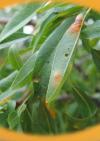
Pests and diseases of fruit trees. Ochre spot (Polystigma amygdalinum PF Cannon)
Castile and León is committed to a high-quality food production system using sustainable, environmentally friendly methods that maintain farm profitability and guarantee consumers outstanding product quality through the prevention, monitoring, and control of pests and diseases that threaten the region's fruit crops.
Pests and diseases of fruit trees. Fig scale (Ceroplastes rusci L.)
Castile and León is committed to a high-quality food production system using sustainable, environmentally friendly methods that maintain farm profitability and guarantee consumers outstanding product quality through the prevention, monitoring, and control of pests and diseases that threaten the region's fruit crops.
Pests and diseases in fruit trees. Screening or shotgunning in almond and stone fruit trees
Castile and León is committed to a high-quality food production system using sustainable, environmentally friendly methods that maintain farm profitability and guarantee consumers outstanding product quality through the prevention, monitoring, and control of pests and diseases that threaten the region's fruit crops.
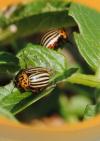
Potato pests. Colorado potato beetle
Potato cultivation in the Community is of significant economic importance among irrigated crops, as it is the third largest crop in area behind corn and beets. Due to its nutritional characteristics and high starch content, it is a fundamental food for people and livestock. It is also used as a fodder and industrial crop and raw material for the cotton and alcohol industries.
Potato pests. Potato golden nematode (Globodera rostochiensis and Globodera pallida)
Potato cultivation in the Community is of significant economic importance among irrigated crops, as it is the third largest crop in area behind corn and beets. Due to its nutritional characteristics and high starch content, it is a fundamental food for people and livestock. It is also used as a fodder and industrial crop and raw material for the cotton and alcohol industries.
Potato pests. Common potato moth (Phthorimaea operculella Zeller)
Potato cultivation in the Community is of significant economic importance among irrigated crops, as it is the third largest crop in area behind corn and beets. Due to its nutritional characteristics and high starch content, it is a fundamental food for people and livestock. It is also used as a fodder and industrial crop and raw material for the cotton and alcohol industries.
Potato pests. Potato flea beetle (Epitrix spp.)
Potato cultivation in the Community is of significant economic importance among irrigated crops, as it is the third largest crop in area behind corn and beets. Due to its nutritional characteristics and high starch content, it is a fundamental food for people and livestock. It is also used as a fodder and industrial crop and raw material for the cotton and alcohol industries.
Potato pests. Potato pox (Rhizoctonia solani Kühn)
Potato cultivation in the Community is of significant economic importance among irrigated crops, as it is the third largest crop in area behind corn and beets. Due to its nutritional characteristics and high starch content, it is a fundamental food for people and livestock. It is also used as a fodder and industrial crop and raw material for the cotton and alcohol industries.
Potato pests. Late blight or potato downy mildew (Phytophthora infestans (Mont.) de Bary)
Potato cultivation in the Community is of significant economic importance among irrigated crops, as it is the third largest crop in area behind corn and beets. Due to its nutritional characteristics and high starch content, it is a fundamental food for people and livestock. It is also used as a fodder and industrial crop and raw material for the cotton and alcohol industries.
Potato pests. Alternariosis (Alternaria solani Sorauer)
Potato cultivation in the Community is of significant economic importance among irrigated crops, as it is the third largest crop in area behind corn and beets. Due to its nutritional characteristics and high starch content, it is a fundamental food for people and livestock. It is also used as a fodder and industrial crop and raw material for the cotton and alcohol industries.
Beet pests. Green beet aphid (Myzus persicae)
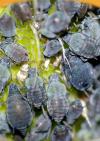
CAUSAL AGENT: A polyphagous hemipteran insect of the Aphididae family. Its hosts include numerous crops, from woody plants of the Prunus genus (primary hosts, e.g., peach trees) to herbaceous plants such as beetroot, potato, tomato, carrot, cabbage, lettuce, beans, peas, alfalfa, etc.
Beet pests. Black beet aphid (Aphis fabae)
CAUSAL AGENT: Hemipteran insect of the Aphididae family with a wide host range, including crops such as beet, legumes, sunflowers, potatoes, tomatoes, etc. Adults: 1.4-3.1 mm, oval, antennae shorter than the body, short black siphons, light-colored legs with dark joints.
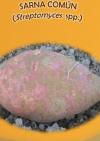
Potato pests. Common scab (Streptomyces spp.)
Potato cultivation in the Community is of significant economic importance among irrigated crops, as it is the third largest crop in area behind corn and beets. Due to its nutritional characteristics and high starch content, it is a fundamental food for people and livestock. It is also used as a fodder and industrial crop and raw material for the cotton and alcohol industries.
Potato pests. Blackfoot (Pectobacterium spp. and Dickeya spp.)
Potato cultivation in the Community is of significant economic importance among irrigated crops, as it is the third largest crop in area behind corn and beets. Due to its nutritional characteristics and high starch content, it is a fundamental food for people and livestock. It is also used as a fodder and industrial crop and raw material for the cotton and alcohol industries.
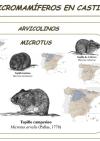
Some micromammals in Castile and León (educational poster)
The Castile and León Agricultural Pest Control Master Plan (AGREEMENT 53/2009, of May 14, of the Regional Government of Castile and León) constitutes a strategy of direct support for farmers in plant health, in line with a sustainable production and environmental model. Its ultimate objective is to provide farmers with useful information to support their decision-making processes.
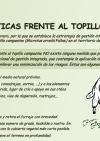
Good practices against the field vole
The Castile and León Agricultural Pest Control Master Plan (AGREEMENT 53/2009, of May 14, of the Regional Government of Castile and León) constitutes a strategy of direct support for farmers in plant health, in line with a sustainable production and environmental model. Its ultimate objective is to provide farmers with useful information to support their decision-making processes.
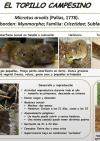
The Field Vole (educational poster)
The Castile and León Agricultural Pest Control Master Plan (AGREEMENT 53/2009, of May 14, of the Regional Government of Castile and León) constitutes a strategy of direct support for farmers in plant health, in line with a sustainable production and environmental model. Its ultimate objective is to provide farmers with useful information to support their decision-making processes.
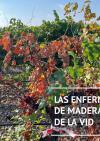
Wood diseases of the vine
The future of wood disease control in vineyards: seeking alternatives. There is an increasing focus on alternatives that can provide the phytosanitary improvements the sector needs.
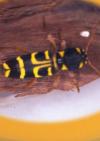
Vineyard pests. Vine screw (Xylotrechus arvicola)
The wine sector in Castile and León is consolidating its position as one of the most dynamic and resilient within the region's thriving agri-food industry. Hence the importance of including those agents that threaten the quality and safety of our food and the profitability of farms in the Pest Master Plan (Agreement 53/2009, of May 14, of the JCyL).
Vineyard pests. Green midge (Empoasca vitis)
The wine sector in Castile and León is consolidating its position as one of the most dynamic and resilient within the region's thriving agri-food industry. Hence the importance of including those agents that threaten the quality and safety of our food and the profitability of farms in the Pest Master Plan (Agreement 53/2009, of May 14, of the JCyL).