





Media Library

Documentary, graphic and/or audiovisual knowledge objects are offered here, offering information on various sectors and topics. Use the keyword search or search filters to access current audiovisual and documentary knowledge objects useful for your implementation.

If you have any questions or suggestions, please contact us here.

Ultrasound in Reproductive Management on Small Ruminant Farms

This document aims to analyze the advantages and disadvantages of using ultrasound in the reproductive management of small ruminant farms, based on the experience of IFAPA through the RAEA of Sheep.

Recommendations for Making Pressed Sheep Cheese

This type of cheese originates from the Castilian region of La Mancha, the main destination for transhumant sheep herds. This area is used for grazing in winter and spring, when milking seasons are most common, with the highest milk production and, therefore, the most common cheesemaking season.

Recommendations for Making Pedroches Cheese

Pedroches cheese is one of the five traditional sheep's milk cheeses from Andalusia included in the catalog of Spanish cheeses. It is made with raw Merino sheep's milk and coagulated by adding rennet, a plant-based coagulant derived from the dried flowers of the cardoon Cynara cardunculus.

Recommendations for Making Soft Sheep Cheese

Soft sheep's milk cheese is traditionally considered a ripened cheese made from enzymatically coagulated raw milk, coagulated with a plant-based coagulant derived from the dried flowers of the cardoon Cynara cardunculus, and aged for a minimum of 60 days.

Recommendations for Making Fresh Malaga Cheese

Fresh Málaga cheese is one of the ten traditional goat's milk cheeses from Andalusia included in the Catalog of Spanish Cheeses. Currently, many artisanal cheese factories in the province of Málaga base their production on this type of dairy.

Recommendations for Cheese Making by Acid or Mineral Destabilization

Mató cheese is a type of cheese that can be obtained through different production techniques: by mineral destabilization (calcium chloride) or acidic (lemon juice or vinegar), or by coagulating the milk with plant-based enzymes, such as the flower of the wild cardoon (Cynara cardunculus). It is obtained by draining the whey, gently pressing (self-pressing) and periodically turning.

Recommendations for Making Cottage Cheese

Cottage cheese is a dairy product obtained from the whey obtained during the cheesemaking process. It is made by heating the whey, which causes the whey proteins to precipitate. This paper establishes basic recommendations during the different stages of cheesemaking to obtain an optimal product from a technological, nutritional, and sensorial perspective.

Recommendations for Making Blue Cheese

Blue cheese is a general category of cheeses, made from cow's, goat's, sheep's, or blended milk, characterized by the internal growth of the Penicillium roqueforti mold, which gives it its characteristic blue-green color. Traditionally, these cheeses were matured in caves, where the mold was established, providing ideal conditions for its development.

Recommendations for making kefir

Kefir is a dairy product originating in Eastern Europe, which has recently gained significant value for its distinctive organoleptic qualities and health-promoting properties. This document establishes a series of basic recommendations for the artisanal production of two types of kefir: traditional and modern, and their respective adaptations to dairy manufacturing.

Recommendations for Making Andalusian Goat Cheese

Andalusia is the main producer of goat's milk in Spain and one of the highest in the entire Mediterranean basin. The milk comes from native breeds (Payoya, Malaga, Murciano-Granadina, and Florida) closely associated with extensive and semi-extensive farming models.

AKISPlataforma.es recommends GO SEBASTIANA

We share a video summary of the live session that the SEBASTIANA Operational Group organized on January 28th to share the results of its project. Getting farmers to think of wool again as a valuable product, not a problem, is one of the conclusions shared during this interesting event.

The Guardians project: Smart solutions for small and medium-sized farms to become guardians of their territories

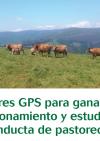
GPS collars for livestock. Function and study of grazing behavior.

New Information and Communication Technologies (ICTs) represent a major advance in livestock farm management, contributing to improved productivity and the quality of life of livestock farmers.

Animal tuberculosis: Research and control in Spain

Animal tuberculosis is a chronic granulomatous infectious disease that affects various domestic and wild mammals and, very rarely, birds. It is caused by species belonging to the Mycobacterium tuberculosis complex (MTC), primarily M. bovis and M. caprae (Grange et al. 1990).

Climate change adaptation strategies for extensive livestock farming in Spain: a social perspective

Extensive livestock farming is a centuries-old activity throughout the Iberian Peninsula. Beyond being an economic sector within the agricultural sector, this activity provides society as a whole with key ecosystem services, including food provision, ecosystem regulation, the provision of cultural goods, the shaping of rural and mountainous landscapes, and fire prevention in forested areas.

Contingency plan for suspected and confirmed sheep and goat pox in Andalusia

Sheep and goat pox is an infectious disease caused by a DNA virus belonging to the Capripoxvirus genus within the Poxviridae family. It produces a clinical picture in sheep and goats characterized by the appearance of fever, generalized nodules and papules, rarely vesicles, internal lesions particularly in the lungs, and, ultimately, death.

Manual on national plans for the eradication of animal diseases in Andalusia

Manual for the eradication of ruminant diseases

Caprine tuberculosis control program

Tuberculosis is a chronic, contagious, infectious disease that suppresses the immune system, leading to the onset of other illnesses, loss of production, and trade restrictions, including restrictions on participation in auctions and competitions. It affects all domestic animals, some wild animals, and humans, and is therefore classified as a zoonosis.

Results of surveillance of transmissible spongiform encephalopathies

Bovine spongiform encephalopathy (BSE, colloquially known as "mad cow disease") is one of the transmissible spongiform encephalopathies (TSE) that affects cattle. Like other TSE diseases, it is characterized by the degeneration of brain tissue, which takes on a sponge-like appearance, leading to death.

National Program for Surveillance and Control of Ovine and Goat Brucellosis in Andalusia.

Member States are primarily responsible for the eradication of ovine and caprine brucellosis. Therefore, the main objective is to declare regions or provinces officially free of brucellosis by Community Decision if they meet the criteria established in Delegated Regulation (EU) 2020/689, consisting of the absence of confirmed cases of B. abortus, B. melitensis, or B.