





Media Library
Documentary, graphic and/or audiovisual knowledge objects are offered here, offering information on various sectors and topics. Use the keyword search or search filters to access current audiovisual and documentary knowledge objects useful for your implementation.
If you have any questions or suggestions, please contact us here.
Destacados
Foliar Analysis for Nutritional Diagnosis of Avocado Plantations. Sampling
Understanding the importance and rationale of foliar analysis is useful for implementing an appropriate fertilization program. The timing and characteristics of the sample taken are essential for a correct diagnosis, as plant nutritional variation will depend on the species, as well as the age and position of the leaf.
Foliar Analysis for Nutritional Diagnosis of Mango Plantations. Sampling
Understanding the importance and rationale of foliar analysis is useful for implementing an appropriate fertilization program. The timing and characteristics of the sample taken are essential for a correct diagnosis, as the plant's nutritional variation depends on the species, as well as the age and position of the leaf.
General Criteria for Establishing an Avocado Plantation
Before establishing an avocado plantation, it is essential to understand its soil and climate requirements and ensure that the plot's characteristics meet these requirements for a profitable crop.
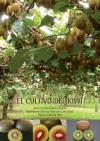
Kiwi cultivation
The kiwi plant is a climbing vine that in its natural environment lives by wrapping itself around the trees that surround it, using them as tutors. It is because of this climbing nature that, even though it is a woody species, it needs a support structure for its commercial cultivation.
Information note and management recommendations: thrips damage to citrus, persimmon, and pomegranate.
Given the damage caused by thrips observed since May on leaves and fruit in various citrus, persimmon and pomegranate crops and the confirmation of the presence of Scirtothrips aurantii Faure in certain areas, the following recommendations have been considered appropriate:
Scirtothrips aurantii, information note and management recommendations, damage caused by thrips in citrus, persimmon and pomegranate.
Given the damage caused by thrips observed since May on leaves and fruit in various citrus, persimmon and pomegranate crops and the confirmation of the presence of Scirtothrips aurantii Faure in certain areas, the following recommendations have been considered appropriate:
Paysandisia archon Triptych, recommendations against the palm borer caterpillar
Paysandisia archon, a lepidopteran of the Castniidae family, is native to South America, whose larvae feed on palm trees. The first detection in Europe was in France and Italy in 1998-99. In Spain, it was first detected in Catalonia in May 2002, and in the Valencian Community in June of that same year.
Thaumatotibia leucotreta (Meyrik) Contingency Plan
This document sets out the measures to be adopted against Thaumatotibia leucotreta (codling moth), a pest regulated by the EU as a priority quarantine pest under Implementing Regulation (EU) 2019/2072 and Delegated Regulation (EU) 2019/170.
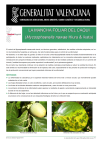
Persimmon leaf spot
Fact sheet for the control of Mycosphaerella nawae in persimmon.
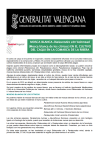
Citrus whitefly, Dialeurodes citri Ashmead, in persimmon crops in the Rivera region.
Persimmon cultivation is expanding and widespread in the Valencian Community, especially in the La Ribera region. The increase in cultivated area and its coexistence with other traditional crops in the area are leading to the establishment of various pests in the persimmon.
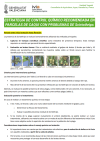
Recommended chemical control strategy for persimmon plots with Scirtothrips problems
Period from bud break to flowering: The presence of Scirtothrips will be assessed weekly using two main methods: 1. Captures in yellow chromatic traps as an indicator of early presence. These traps require inspection by specialized technical personnel. 2.
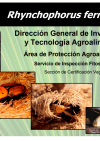
Self-explanatory talk Rhynchophorus ferrugineus (Red Palm Weevil)
Information talk on Rhynchophorus ferrugineus. Directorate General of Agrifood Research and Technology
National Contingency Plan for Fusarium oxysporum f. sp. Cubense (EF Sm.) WC Snyder & HN Hansen Tropical Race 4
This document sets out the measures to be taken against Fusarium oxysporum f. sp. cubense Tropical Race 4 (Foc RT4), a quarantine pest in the Canary Islands regulated by the Ministerial Order of 12 March 19871 with the aim of preventing its appearance on the islands and, if it does, acting quickly and effectively, determining its distribution and implementing eradication measures.