





Media Library

Documentary, graphic and/or audiovisual knowledge objects are offered here, offering information on various sectors and topics. Use the keyword search or search filters to access current audiovisual and documentary knowledge objects useful for your implementation.

If you have any questions or suggestions, please contact us here.

Influence of the Agroenvironment on Quality-Related Traits in Strawberry Varieties. 2022/2023 Crop Season

V National CoP Meeting ModernAKIS

Recording of the 5th National CoP Meeting of modernAKIS @heuropemodernakis, the objective of which was to propose suggestions for improving the presentation of data and research, thus achieving more accessible and accessible dissemination to all stakeholders who can benefit from innovation and knowledge transfer in the agri-food sector.

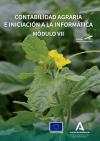
Agricultural Accounting and Introduction to Computer Science. Module VII.

This teaching manual, "Module VII. Agricultural Accounting and Introduction to Information Technology," addresses aspects related to the financial management of agricultural holdings and the application of ICTs in the agricultural sector.

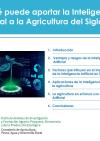
What can Artificial Intelligence contribute to 21st-century agriculture?

Given its importance and the change that Artificial Intelligence is bringing to information access and management in virtually all areas, this document describes the useful applications it is having or may have in agriculture, also including recommendations for avoiding potential negative effects that could arise from its use.

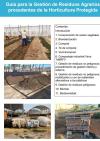
Guide for the Management of Agricultural Waste from Protected Horticulture

This guide includes a collection of technical sheets containing various solutions for managing plant debris and inorganic waste. These informative sheets describe, in a practical and straightforward manner, the technical information needed to address the various management procedures.

Nitrogen Fertilization of a Raspberry Crop: Efficiency and Productivity

This paper presents the results of a fertigation trial conducted on a remontant raspberry crop with two harvests in the province of Huelva. The effect of applying different doses of nitrogen fertilizer on yield, the percentage of nitrogen in different plant organs, and its uptake by the plant and fruit were evaluated. The efficiency and productivity of N for each treatment were calculated.

TierraTV

Plataforma Tierra's video channel with several playlists about crops and agriculture-related activities.

Phytosanitary alert and information network, field protocol for crop monitoring: eggplant

Field manual for estimating the risk of damage caused by pests and diseases in eggplant cultivation.

Phytosanitary alert and information network, field protocol for crop monitoring: zucchini

Field manual for estimating the risk of damage caused by pests and diseases in zucchini cultivation.

Phytosanitary strategies in tomato

Strategies for the use of phytosanitary products in tomte cultivation

Annual Report 2023

The Institute of Natural Resources and Agrobiology of Seville (IRNAS) is an experimental research center in the areas of Agricultural Sciences and Natural Resources.

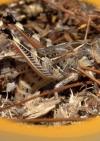
Lobster

CAUSING AGENT: Orthoptera of the Gomphocerinae subfamily. The most common in Castile and León is Dociostaurus maroccanus, along with others such as Calliptamus italicus.

Pests in less than 3 minutes

The following links provide access to a series of videos that quickly, easily, and visually provide basic knowledge about agricultural pests and diseases.

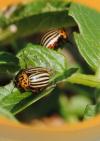
Potato pests. Colorado potato beetle

Potato cultivation in the Community is of significant economic importance among irrigated crops, as it is the third largest crop in area behind corn and beets. Due to its nutritional characteristics and high starch content, it is a fundamental food for people and livestock. It is also used as a fodder and industrial crop and raw material for the cotton and alcohol industries.

Help Guide for completing applications for registration and updating in the Regional Registry of Farms (REA, REAFA in Andalusia).

Summary of steps to register a farm.

Potato pests. Potato golden nematode (Globodera rostochiensis and Globodera pallida)

Potato cultivation in the Community is of significant economic importance among irrigated crops, as it is the third largest crop in area behind corn and beets. Due to its nutritional characteristics and high starch content, it is a fundamental food for people and livestock. It is also used as a fodder and industrial crop and raw material for the cotton and alcohol industries.

Potato pests. Common potato moth (Phthorimaea operculella Zeller)

Potato cultivation in the Community is of significant economic importance among irrigated crops, as it is the third largest crop in area behind corn and beets. Due to its nutritional characteristics and high starch content, it is a fundamental food for people and livestock. It is also used as a fodder and industrial crop and raw material for the cotton and alcohol industries.

Potato pests. Potato flea beetle (Epitrix spp.)

Potato cultivation in the Community is of significant economic importance among irrigated crops, as it is the third largest crop in area behind corn and beets. Due to its nutritional characteristics and high starch content, it is a fundamental food for people and livestock. It is also used as a fodder and industrial crop and raw material for the cotton and alcohol industries.

Potato pests. Potato pox (Rhizoctonia solani Kühn)

Potato cultivation in the Community is of significant economic importance among irrigated crops, as it is the third largest crop in area behind corn and beets. Due to its nutritional characteristics and high starch content, it is a fundamental food for people and livestock. It is also used as a fodder and industrial crop and raw material for the cotton and alcohol industries.

Potato pests. Late blight or potato downy mildew (Phytophthora infestans (Mont.) de Bary)

Potato cultivation in the Community is of significant economic importance among irrigated crops, as it is the third largest crop in area behind corn and beets. Due to its nutritional characteristics and high starch content, it is a fundamental food for people and livestock. It is also used as a fodder and industrial crop and raw material for the cotton and alcohol industries.