






Advances in wood analysis and soil studies by the Conifers+ Operational Group
Description
The Conifers+ Operational Group continues to advance its research and data collection, achieving significant milestones in both the analysis of the structural quality of standing wood and soil sampling to identify alternatives to diseased conifers . These advances strengthen the project's scientific foundation and provide key information for decision-making in forest management.
Measurements of the structural quality of wood in standing trees have been completed
Madera Plus, in collaboration with the project partners, has completed the characterization of the technological properties of wood in 30 plots of Douglas fir ( Pseudotsuga menziesii ) , distributed across northern Spain. The evaluated plots are located in Álava, Asturias, Gipuzkoa, La Rioja, León, Lugo, Navarra, Ourense, Pontevedra, and Biscay , encompassing a wide variety of climatic and soil conditions.
The analyzed masses have ages ranging from 28 years (León) to 55 years (Navarra) , and are located at altitudes ranging from 300 to 1,300 meters .
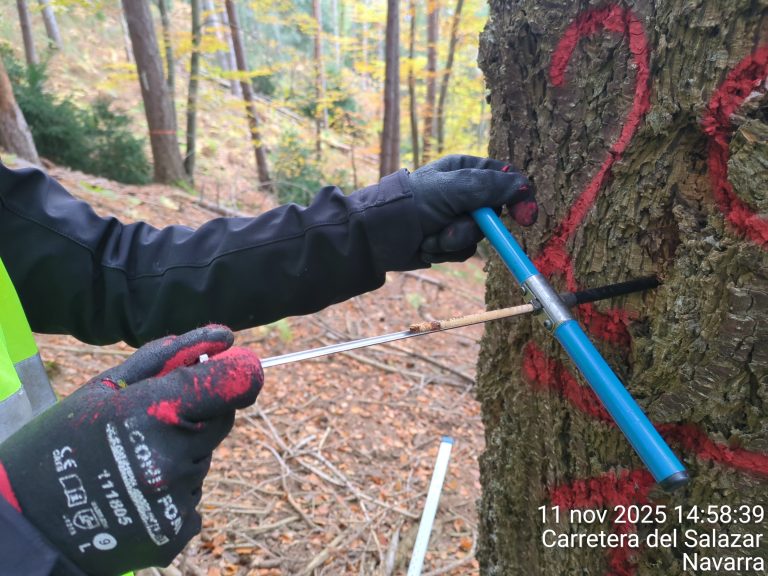
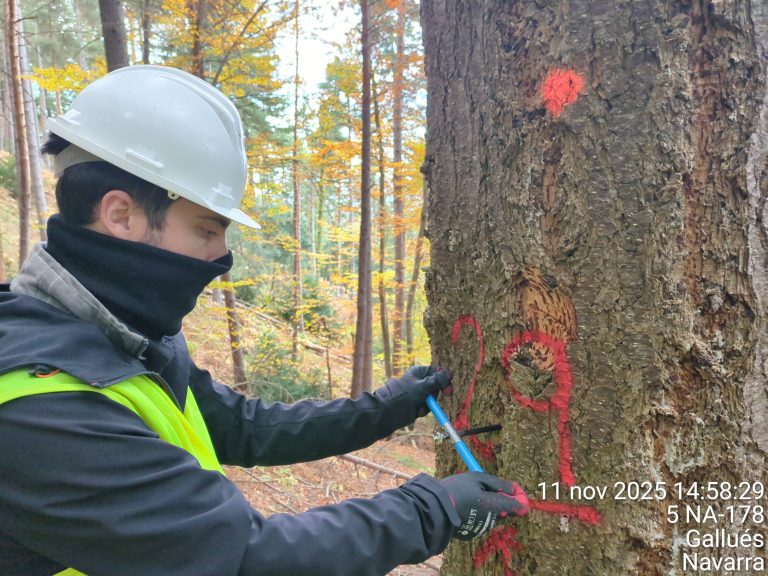
Figures 1 and 2. Detail of the measurements in Navarre
Sonic wave speed measurements, carried out on the trunk in the direction of the fiber, have shown high variability , with values ranging between 4,150 m/s and 5,150 m/s , and with significant differences between plots .
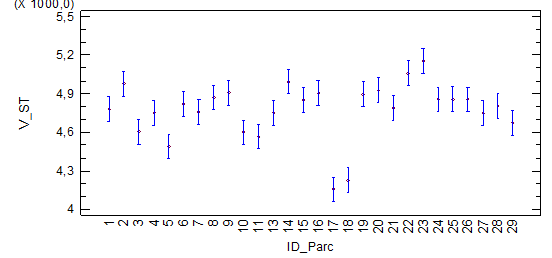
Figure 2. Sonic wave measurements
Similarly, the basic density values of the wood show a notable variability, with ranges between 386 kg/m³ and 570 kg/m³ , also with significant differences between plots.
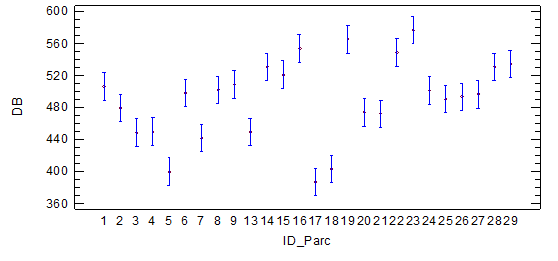
Figure 3. Basic density values
This is the first study of its kind conducted in Spain , evaluating the standing technological properties of Douglas fir wood throughout its entire range. The results obtained will be fundamental for describing the average performance of Douglas fir for industrial use and for analyzing its relationship with growth variables, mass characteristics, and site quality.
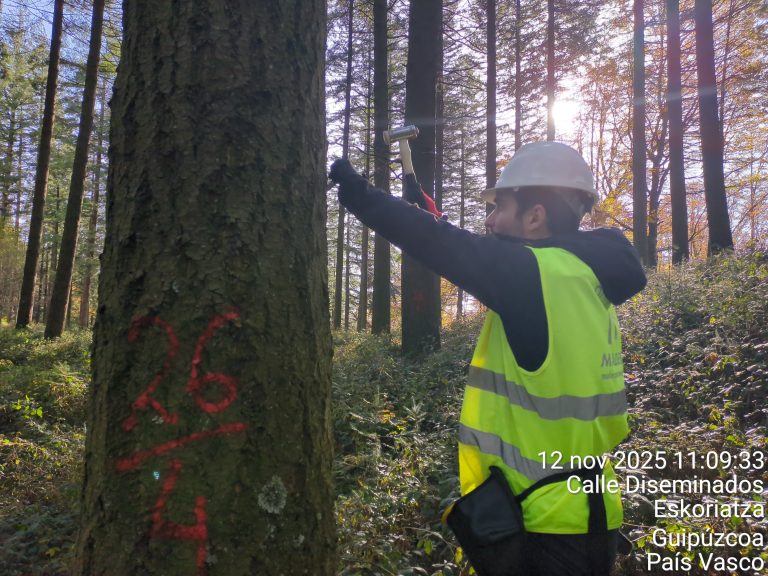
Figure 4. Measurements in Guipúzcoa
Advances in soil sampling in Navarre for alternatives to diseased conifers
Meanwhile, the Operational Group has completed a new phase of soil sampling in Navarre , as part of a study on alternatives to conifers affected by various diseases . This time, the work was carried out in a fir forest in Aspurz (Nabaskoze, Navarre) , on calcarenites , at almost 1,000 meters above sea level , with a 60% slope and a northern orientation .
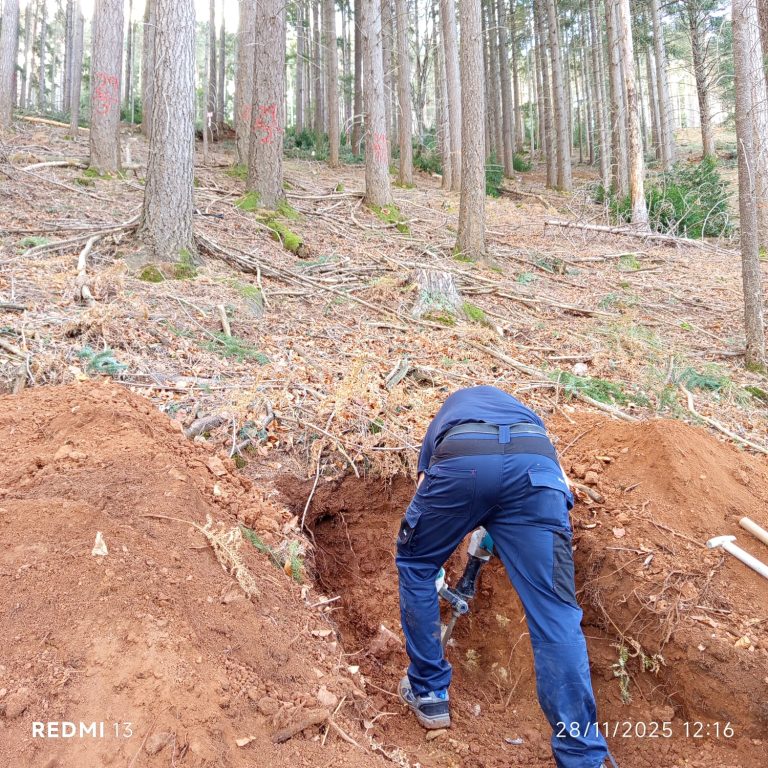
Figure 1. Detail of the test pit made in Aspurz (Navarra)
As with the test pits previously made in Antzuola (Guipúzcoa) and Santurdejo (La Rioja) , these works are framed within the objective of generating predictive maps of ecological suitability for alternative species to the pine forests affected by diseases.
A jackhammer was used to open the test pit, and the samples, extracted by horizons, were sent to a certified laboratory for the analysis of the main soil variables : texture, percentage of coarse elements, pH, organic matter, conductivity, presence of active limestone, among others.
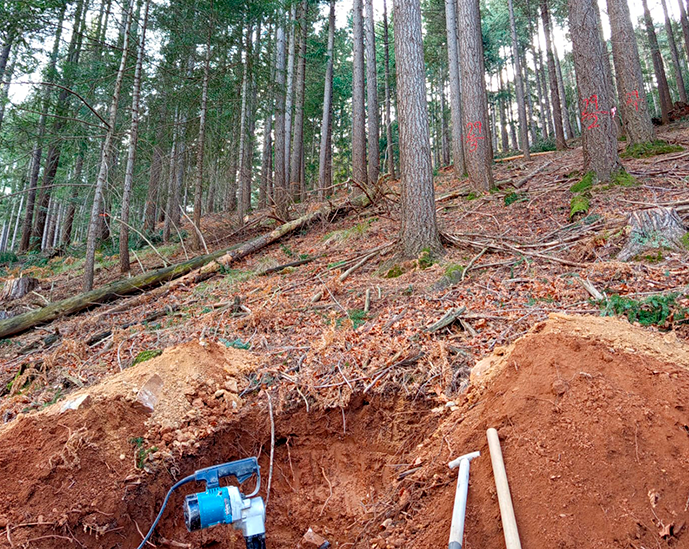
Figure 2. Tools used to make the test pit and general view of the Douglas plot
At first glance, the soil profile shows clear differences compared to those analyzed to date , with a less dark, more reddish appearance and a sandier texture .
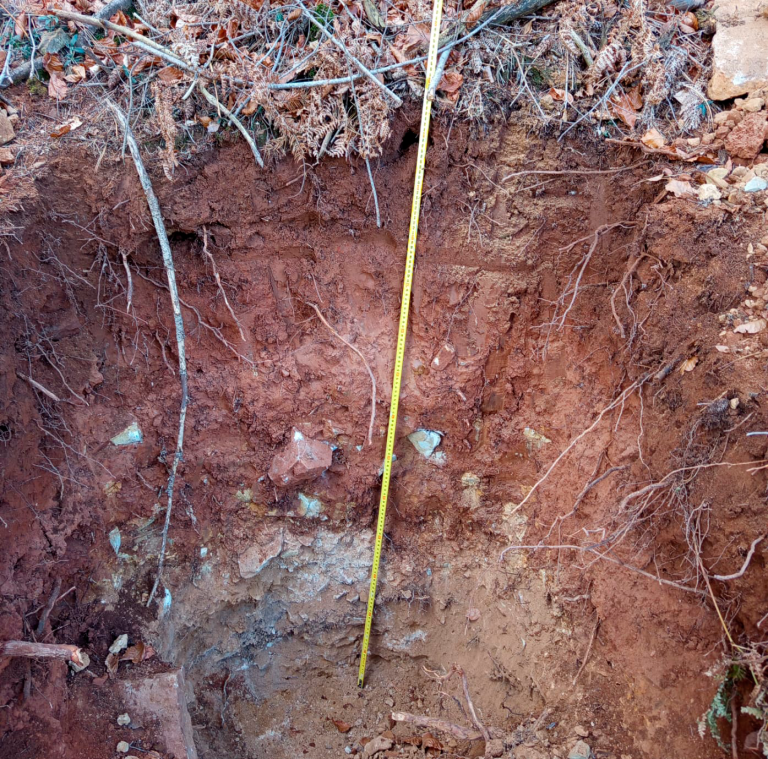
Figure 3. Detail of the depth of the test pit made (130 cm)
Once the laboratory results are available, aggregate parameters will be calculated for each profile , allowing progress in the ecological modeling process by integrating soil data with climatic and physiographic information. This work is directly linked to Outcome 2 of the project , which focuses on developing territorial maps of ecological suitability for the establishment of alternative species such as *Pseudotsuga menziesii* , *Pinus taeda* , *Pinus elliottii *, * Picea sitchensis* , and *Sequoia sempervirens *.
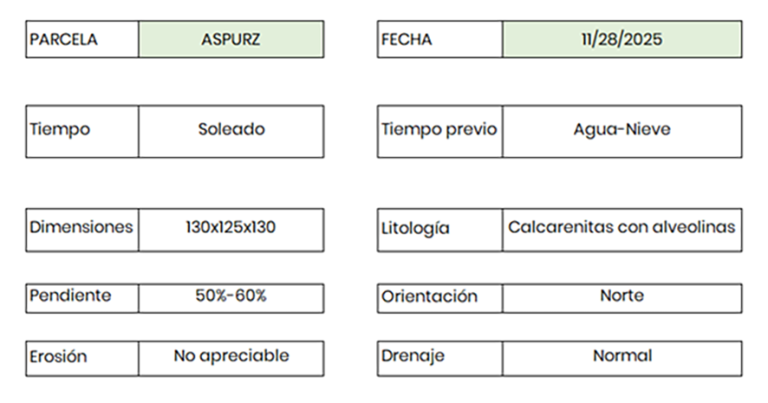
Figure 4. General data of the test pit made in Aspurz
With these advances, the GO Conifers+ consolidates its progress in generating technical and scientific knowledge aimed at more resilient forest management , based on objective data and adapted to the health and climate challenges facing coniferous forests in Spain.