





Media Library
Documentary, graphic and/or audiovisual knowledge objects are offered here, offering information on various sectors and topics. Use the keyword search or search filters to access current audiovisual and documentary knowledge objects useful for your implementation.
If you have any questions or suggestions, please contact us here.
Destacados
Contingency plan for suspected and confirmed sheep and goat pox in Andalusia
Sheep and goat pox is an infectious disease caused by a DNA virus belonging to the Capripoxvirus genus within the Poxviridae family. It produces a clinical picture in sheep and goats characterized by the appearance of fever, generalized nodules and papules, rarely vesicles, internal lesions particularly in the lungs, and, ultimately, death.
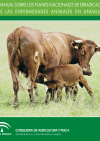
Manual on national plans for the eradication of animal diseases in Andalusia
Manual for the eradication of ruminant diseases
Caprine tuberculosis control program
Tuberculosis is a chronic, contagious, infectious disease that suppresses the immune system, leading to the onset of other illnesses, loss of production, and trade restrictions, including restrictions on participation in auctions and competitions. It affects all domestic animals, some wild animals, and humans, and is therefore classified as a zoonosis.
Swine Biosecurity Triptych
Decalogue of biosecurity in pig farms
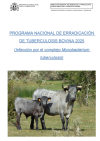
National Bovine Tuberculosis Eradication Program in Andalusia
The territorial scope of this program is the Autonomous Community of Andalusia, which, according to the national program, is included among those autonomous communities with a herd prevalence rate greater than 1% or "high prevalence."
Good practices for biodiversity in rural areas
The RRN (National Rural Network) is a platform comprised of key stakeholders involved in rural development. Its purpose is to strengthen alliances, share experiences, and create a common framework to improve the implementation of rural development policy, as well as to disseminate the opportunities it offers to potential beneficiaries and the general public.
Updates on the single CAP application
The Good Agricultural and Environmental Practices (GAPs) that farmers must comply with in order to fully receive direct CAP aid, area payments, livestock charges, and certain POSEI program aid have been simplified and made more flexible.
Guide to good practices for the control and reduction of salmonellosis in pig farms
Salmonellosis is a major concern for public health authorities in the European Union. Every year, thousands of people become infected with Salmonella from consuming food contaminated by this bacteria. It is the leading cause of death from foodborne infections in developed countries.
Article in the official magazine of the National Veterinary Corps Association
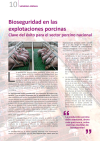
Biosecurity in pig farms: Key to success for the national pig sector
Results of surveillance of transmissible spongiform encephalopathies
Bovine spongiform encephalopathy (BSE, colloquially known as "mad cow disease") is one of the transmissible spongiform encephalopathies (TSE) that affects cattle. Like other TSE diseases, it is characterized by the degeneration of brain tissue, which takes on a sponge-like appearance, leading to death.
National Program for Surveillance and Control of Bovine Brucellosis in Andalusia.
Member States are primarily responsible for the eradication of bovine brucellosis. Therefore, the main objective is to declare regions or provinces officially free of bovine brucellosis by Community Decision if they meet the criteria established in Delegated Regulation (EU) 2020/689, consisting of the absence of confirmed cases of B. abortus, B. melitensis, or B.
National Program for Surveillance and Control of Ovine and Goat Brucellosis in Andalusia.
Member States are primarily responsible for the eradication of ovine and caprine brucellosis. Therefore, the main objective is to declare regions or provinces officially free of brucellosis by Community Decision if they meet the criteria established in Delegated Regulation (EU) 2020/689, consisting of the absence of confirmed cases of B. abortus, B. melitensis, or B.
National Program for Surveillance and Control of Ovine and Goat Brucellosis 2023-2030. (Infection with B. abortus, B. melitensis, and B. suis)
Member States are primarily responsible for the eradication of ovine and caprine brucellosis. For a zone to be declared officially free from the disease, it must meet the following requirements: no confirmed cases of B. abortus, B. melitensis, or B.
National Bovine Tuberculosis Eradication Program (Mycobacterium tuberculosis complex infection)
Tuberculosis is an infection by any of the mycobacterial species of the Mycobacterium tuberculosis complex (MTC) present in bovine animals (including all Bos and Bubalus species) and in bison (Bison bison and Bison bonasus), in deer, goats or camelids.
Phytopathological Records
To provide information on the biology and control of pests, diseases, weeds, physiopathies, and auxiliaries of interest to plants in Extremadura.
Epidemiological situation of classical swine fever
CSF is a highly contagious disease that affects both domestic and wild swine. It is caused by a virus of the Flaviviridae family, genus Pestivirus, and is characterized by hemorrhagic lesions and is typically fatal in its acute forms, affecting animals of all ages. CSF must be ruled out in any case that presents with hemorrhagic symptoms or nervous symptoms.
Procedure for uprooting olive plantations for ornamental purposes in the Autonomous Community of Aragon
Information on the uprooting of olive tree plantations for ornamental purposes in the Autonomous Community of Aragon
Active ingredients allowed in integrated production for pome fruit trees and restrictions on use
Information on active ingredients in integrated production for pome fruit trees and restrictions on use
Active ingredients allowed in integrated production for stone fruit trees and restrictions on use
Information on active ingredients in integrated production for stone fruit trees and restrictions on use
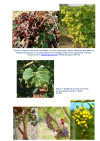
Golden flavescence of grapevine and its vector Scaphoideus titanus Ball
Golden flavescence, in English “flavescence dorée of grapevine”, is a very serious and destructive disease that affects the vine. It is a disease of bacterial origin, being produced by the phytoplasma Candidatus Phytoplasma vitis, which needs to be transmitted by an almost specific vector called the vine cicada (Scaphoideus titanus Ball)