





Media Library

Documentary, graphic and/or audiovisual knowledge objects are offered here, offering information on various sectors and topics. Use the keyword search or search filters to access current audiovisual and documentary knowledge objects useful for your implementation.

If you have any questions or suggestions, please contact us here.

Sunflower Diseases. Alternaria Blight (Alternaria spp.)

The sunflower is an oilseed crop from which high-quality oil is extracted for human consumption. The residues from seed milling are used for animal feed and in derivatives for industrial use. It is a hardy, adaptable plant that makes excellent use of soil resources and recovers easily after periods of drought.

Sunflower diseases: Albugo or False white rust

The sunflower is an oilseed crop from which high-quality oil is extracted for human consumption. The residues from seed milling are used for animal feed and in derivatives for industrial use. It is a hardy, adaptable plant that makes excellent use of soil resources and recovers easily after periods of drought.

Sunflower diseases. Charcoal rot of sunflower (Macrophomina phaseolina)

The sunflower is an oilseed crop from which high-quality oil is extracted for human consumption. The residues from seed milling are used for animal feed and in derivatives for industrial use. It is a hardy, adaptable plant that makes excellent use of soil resources and recovers easily after periods of drought.

Sunflower Diseases. Stem Canker or Phomosis of Sunflower

The sunflower is an oilseed crop from which high-quality oil is extracted for human consumption. The residues from seed milling are used for animal feed and in derivatives for industrial use. It is a hardy, adaptable plant that makes excellent use of soil resources and recovers easily after periods of drought.

Rapeseed pests. Flea and scabies mites (Psylliodes spp., Phyllotreta spp., and others)

The need to introduce new crops adapted to regional dryland agriculture has led to rapeseed becoming an alternative to cereal monoculture. Rapeseed is an annual herbaceous plant from the cruciferous family used as an oilseed, with the purpose of extracting oil from its seeds.

Rapeseed pests. Cecidomyi or rapeseed midge

The need to introduce new crops adapted to regional dryland agriculture has led to rapeseed becoming an alternative to cereal monoculture. Rapeseed is an annual herbaceous plant from the cruciferous family used as an oilseed, with the purpose of extracting oil from its seeds.

Rapeseed pests. Mealybug

The need to introduce new crops adapted to regional dryland agriculture has led to rapeseed becoming an alternative to cereal monoculture. Rapeseed is an annual herbaceous plant from the cruciferous family used as an oilseed, with the purpose of extracting oil from its seeds.

Rapeseed pests. Rapeseed weevil

The need to introduce new crops adapted to regional dryland agriculture has led to rapeseed becoming an alternative to cereal monoculture. Rapeseed is an annual herbaceous plant from the cruciferous family used as an oilseed, with the purpose of extracting oil from its seeds.

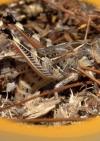
Lobster

CAUSING AGENT: Orthoptera of the Gomphocerinae subfamily. The most common in Castile and León is Dociostaurus maroccanus, along with others such as Calliptamus italicus.

Handling forage for silage

The definitions given in this document regarding pastures and forages will be adjusted to the Basic Nomenclature of Pastures in Spain (Ferrer et al., 2001). Following its publication, various forums agreed upon its adoption in all Spanish publications on pastures and forages.

Varieties of corn in Asturias

Maize, as a cultivated plant, is one of the three most important species in the world, along with rice and wheat, and is one of the most efficient in its use of water to transform nutrients into productive yield (kg DM ha-1). It is a multifunctional species. It can be cultivated green, ensiled, or harvested for grain.

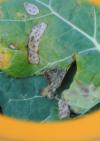
Pests in rapeseed. Alternaria in rapeseed

The need to introduce new crops adapted to regional dryland agriculture has led to rapeseed becoming an alternative to cereal monoculture. Rapeseed is an annual herbaceous plant from the cruciferous family used as an oilseed, with the purpose of extracting oil from its seeds.

Rapeseed pests. Blackleg

The need to introduce new crops adapted to regional dryland agriculture has led to rapeseed becoming an alternative to cereal monoculture. Rapeseed is an annual herbaceous plant from the cruciferous family used as an oilseed, with the purpose of extracting oil from its seeds.

Pests in less than 3 minutes

The following links provide access to a series of videos that quickly, easily, and visually provide basic knowledge about agricultural pests and diseases.

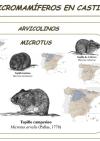
Some micromammals in Castile and León (educational poster)

The Castile and León Agricultural Pest Control Master Plan (AGREEMENT 53/2009, of May 14, of the Regional Government of Castile and León) constitutes a strategy of direct support for farmers in plant health, in line with a sustainable production and environmental model. Its ultimate objective is to provide farmers with useful information to support their decision-making processes.

Good practices against the field vole

The Castile and León Agricultural Pest Control Master Plan (AGREEMENT 53/2009, of May 14, of the Regional Government of Castile and León) constitutes a strategy of direct support for farmers in plant health, in line with a sustainable production and environmental model. Its ultimate objective is to provide farmers with useful information to support their decision-making processes.

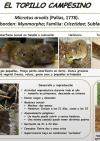
The Field Vole (educational poster)

The Castile and León Agricultural Pest Control Master Plan (AGREEMENT 53/2009, of May 14, of the Regional Government of Castile and León) constitutes a strategy of direct support for farmers in plant health, in line with a sustainable production and environmental model. Its ultimate objective is to provide farmers with useful information to support their decision-making processes.

Supervising agricultural trials with drones

Through photogrammetric drone flights, hundreds of images are taken using RGB, multispectral, and/or thermal sensors, which are processed to generate 3D models and orthophotos of the tests.

Presentation "Effect of direct seeding on soil quality indicators in extensive rainfed systems"

Course: Direct sowing in rainfed crops. Keys to its implementation and development within the framework of the CAP ecoregimes. "Effect of direct sowing on soil quality indicators in extensive rainfed systems"

Cost structure of the main crops in organic farming in the Region of Murcia

Document describing the main guidelines for regional organic farming in Murcia